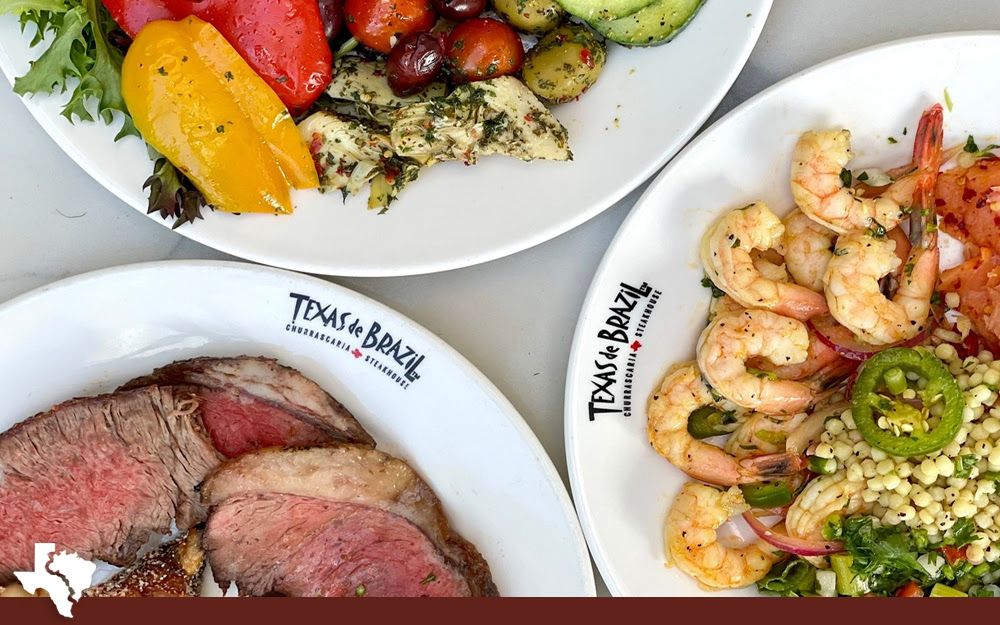
 Your Privacy Choices
 California Privacy Notice


What Are Gauchos and Why Do They Matter?
If you’ve done much reading about restaurants like Texas de Brazil, one thing you’ve likely noticed is that our servers, the people who bring skewers of delicious meat from our grills to your tables, are known as gauchos. What you might not know, though, is what it means to be called a gaucho, why we’ve chosen the name, and what history there is behind it all.
To answer these questions, we need to do some digging into the history of South America’s cattle trade, the grasslands of southern Brazil, and even the origins of churrasco itself. There’s a lot of ground to cover, so let’s get started!
Table of Contents
First: What is a Gaucho?
The simple answer is that a gaucho is a Brazilian cowboy. Except, if you’re thinking about the cowboys you read about or see in westerns, riding horses and having adventures, you’re not quite on the mark. There are some similarities, but being an entire continent and centuries apart, there are quite a few significant differences.
Gauchos were largely mestizos, which is a social pseudo-ethnic group made up of people who were of mixed European and indigenous heritage. As you might expect, that entire group was the result of European colonization in South America.
Genetic examination in the modern day shows ancestry including native tribes, African stock from imported slaves, a high proportion of Spanish influence, and assorted other European influences. Overall, though, rather than an ethnic group, gauchos were more of a social class, accepting anyone who took on the lifestyle.
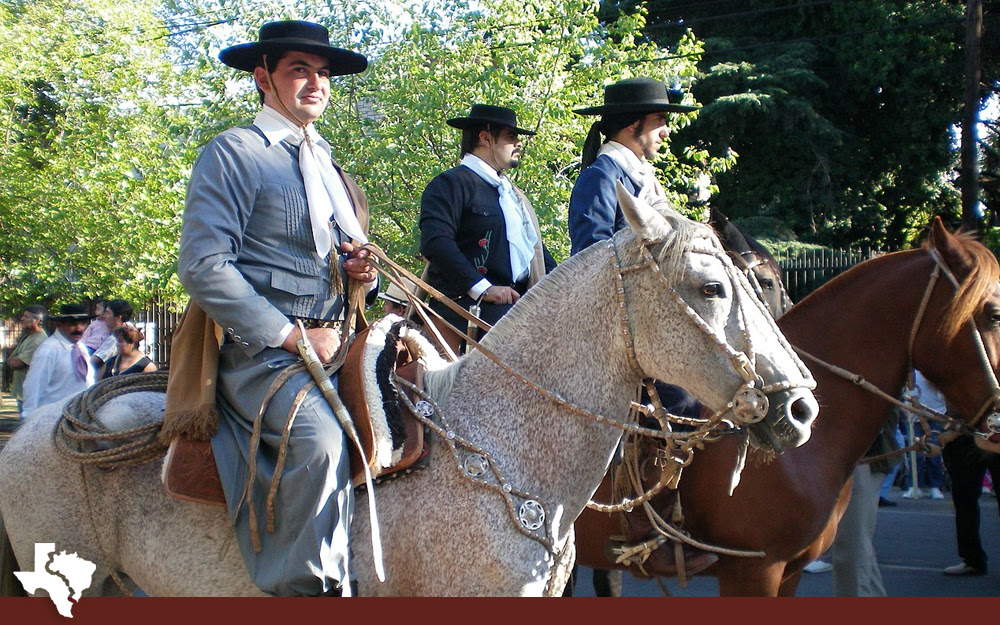
Gauchos have a long and celebrated history, stretching from the 1750s through to today, though the modern gaucho is very different from what they were hundreds of years ago, and the gauchos we have on staff at our restaurants are also different. More on that later.
Before digging too deep, we need to express a word of caution. What we outline below is mostly accurate, but it’s far from the whole story. Gauchos from Argentina had different histories and experiences than those from southern Brazil, for example. We’re also vastly glossing over immense amounts of history; no one blog post can possibly do it justice. Take it all with a grain of salt and enjoy the lore.
Where do Gauchos Come From?
Gauchos are often thought of as an Argentinian group, and Argentina has a huge amount of history and culture centered around them and their history. Similarly, Uruguay also has a significant amount of gaucho history and culture, as does Rio Grande do Sul, the southernmost state of Brazil that borders Uruguay.
This is because the concept and the culture of the gaucho transcends borders and is centered on the physicality of the region; the Pampas, the fertile, flat, grassland region that stretches over a million square kilometers throughout this region of South America. A significant chunk of eastern Argentina, all of Uruguay, and the southern stretches of Rio Grande do Sul are part of the Pampas.

So, while gauchos are an important part of Brazil’s culinary traditions, many of the cultural and culinary traditions surrounding gauchos are more appropriately Uruguayan or Argentinian in origin.
What did Historical Gauchos Do?
In the early 1700s and even before, the Pampas plains were largely untamed. As colonization spread throughout South America, European groups brought horses and cattle with them, and those species occasionally were released or escaped.
Some of those livestock found their way to the Pampas, where they were provided with an environment relatively free of large predators (the worst being cougars and maned wolves, neither of which was likely to take down a cow or horse when easier prey existed), full of abundant food and water, and extensive territory to roam. This ideal breeding ground led to roving herds of semi-wild horses and cattle all over the plains.
In the mid-1700s, Europeans readily provided an outlet for various animal products, including tallow, hides, and other byproducts of horses and cattle. So, groups of people took up tools like lassos, knives, bolas (or boleadoras), and protective gear like ponchos and pleated trousers, and headed to the plains.
These were the first gauchos. Their task was to ride the plains and capture or hunt the horses and cattle that were prominent, and bring them or their byproducts back to civilization with them.
While on the plains, gauchos lived on what they could find. They didn’t bring much with them, just tools, basic supplies, and things like coarse rock salt. They subsisted largely on the meat they got from the animals they hunted.
This was the South American equivalent of the wild west. These people built simple huts in simple communities out on the plains, and subsisted by hunting animals and trading them for supplies they couldn’t get on their own. As a semi-isolated culture, they developed their own traditions, including religions, music, and more.
Of course, nothing ever stays the same forever. By the end of the 1700s, individuals came in and bought or otherwise acquired most of the free-roaming livestock on the Pampas. They laid claim to territory and herds.
But still, these animals were half-wild, difficult to handle and tame. They had been generations removed from their well-bred and submissive forebears, after all. So these landowners did the simplest thing they could: they hired the local gauchos to work as animal handlers, tending to the herds as necessary.
By a hundred years later, in the late 1800s, most of the Pampas was fenced into estates, the land was more heavily exploited, and the herds were gradually replaced by purebred animals, and their wild forage was replaced by cultivated alfalfa.
And the gauchos? They, too, were tamed. Instead of being rough and ready free spirits living loose on the plains, they were converted (or reduced, as some view it) into farmhands and workers, the vibrancy and uniqueness of their culture largely lost.
Nevertheless, the gaucho survived in folklore as a kind of folk hero. Migratory, brave, blunt, and strong, the gauchos were adept at handling horses and cattle, at surviving on their own, and bucking authority when they deemed it necessary. Many poems, songs, and books were written about them, in much the same way that the genre of westerns exists to glamorize the American cowboy.
This was intentional, especially in Argentina. The glorification of the gaucho was a reactionary move, a nativist and nationalist way of preserving Argentinian culture against the influences of mass European immigration at the time. The result is what we have today, for good and ill.
Beyond that, gauchos were also frequently conscripted into armies of the region, though the groups that took to the fighting took on different names; the montonera, rather than the gauchos.
In the current day, gaucho is also a name taken on by residents of the southern region of Brazil; they’ve adopted it as simply a descriptor of their southern heritage, even if they’ve never ridden a horse or touched a cow in real life. Such is the way with cultural signifiers the world over.
The Culinary Culture of the Gauchos
While the biggest attributes of gauchos were their skill at horsemanship, their rugged ability to survive in the open plains, and even their appearance, their culinary culture is no less important. In fact, it’s the root of what we do at Texas de Brazil, and what churrascarias do all throughout Brazil.
Gauchos had essentially free, unfettered access to cattle, which meant they were easily and readily able to have high-quality beef at the drop of a hat. Beef and other meat were staples of their diet, supplemented with what they could find on the plains (a lot of yerba mate, empanadas, green sauces, and the like) and what they could trade for.
As a semi-nomadic group, on the open plains of the Pampas, there weren’t a lot of options. Gauchos developed a way to cook their meat using what they could carry and what they had available.

They would clear a space, often digging a trench where a fire could be built and sheltered from the unrelenting winds that would otherwise ignite the plains and cause devastating losses.
They would build a simple structure over the top, with raised bars. These would hold skewers, one of the few tools the gauchos carried with them for cooking.
They would season the meat with the coarse rock salt they carried. This would saturate into the meat as fat rendered out, flavoring it without dominating it. This salt could even be scraped off and recovered for further uses, since it would be unpleasant to consume on its own.
One of the staple tools of the gaucho, used for everything from cutting grasses as tinder to butchering animals for food to serving that food, was the gaucho knife. These were some of the most important items the gauchos carried, and are a key part of their appearance even today.
Often, they would cook these meals in large, communal groups, though the gauchos deeper in the plains might not have many friends around while they’re working.
Over the centuries, while the actual gaucho culture was stripped away, some elements were carried forward. Their music is a huge influence on an entire genre in South America. Their way of dress has been mythologized in the same way our chaps, boots, and hats for cowboys have in America. And, of course, this method of grilling food was refined into churrasco, the Brazilian barbecue we know and love today.
The Gaucho in Texas de Brazil
So, how do our modern gauchos stand up compared to the historical and mythological gauchos of southern Brazil and Argentina?
Well, they really aren’t the same in much but name. But that shouldn’t be a surprise, should it? It’s not as though we’re hiring exclusively from southern Brazil and importing those people just to work at our restaurants in the States, right?
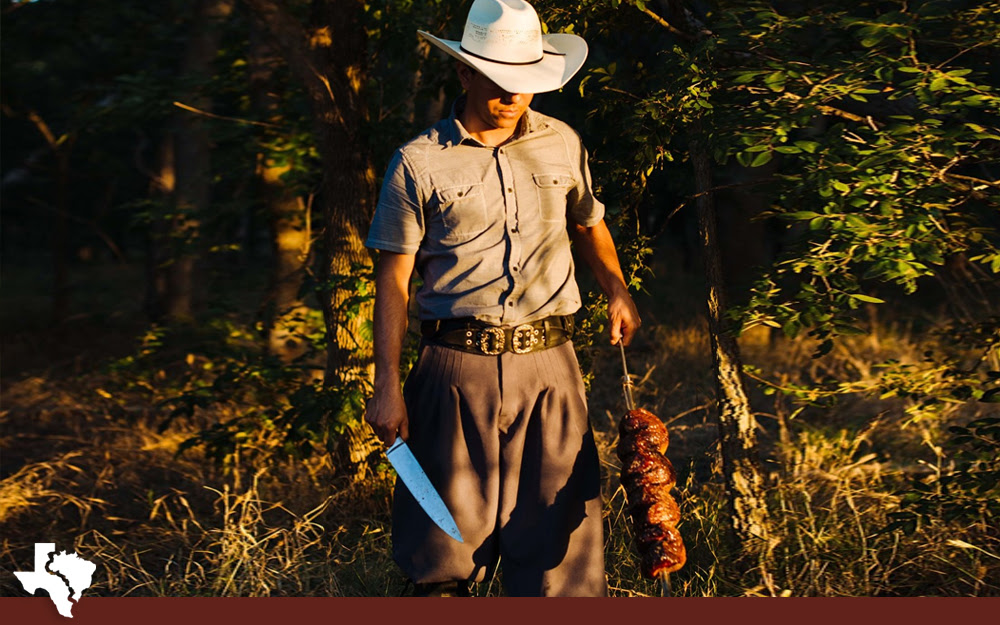
No, we’ve simply carried forth some of the cultural elements of the gaucho in our presentation. The method of cooking, the churrasco that was developed over the course of centuries, has been refined and brought to the States through our restaurant. The knives used to cut and serve the meat are still hung at the belts of all of our gauchos. Our servers aren’t dressing like traditional horsemen, of course, nor are they showing off their horsemanship in our restaurants.

The rodizio style of dining is also a key difference. While you can be certain that gauchos on the Pampas were sharing their meat with their friends, it wasn’t the sort of institutionalized rotation of foods that we’ve put together in our restaurants.
No, the rodizio style comes from an altogether different part of history, an addition from well after the gauchos were a cultural myth and churrasco was an institution. We have a whole rundown of the history of rodizio if you’re curious.
What’s important is the culinary traditions. While we haven’t dug a trench, we still cook our meat on skewers over open flame, with nothing more than salt as a seasoning for most of them. The grill may be more refined, but the meat is no less delicious than what the gauchos on the plains were enjoying hundreds of years ago. It’s a way to taste the flavors of different cuts of meat, rather than the butters, herbs, and sauces slathered on them in other, more American steakhouses.
So, while our gauchos may not have much in common ethnically, socially, or historically with the gauchos from the plains of South America, the food is a definite throughline that stretches hundreds of years in the past – and hopefully, hundreds of years in the future. For as long as there will be people, for as long as we’ll need to eat to survive, cooking delicious food will be a way of life for many. We’re just doing our part to keep Brazil’s culinary traditions alive and bringing them to new audiences around the world.
If you want to experience the history of the Gauchos, you’ll be best off visiting southern Brazil or Argentina, and exploring the plains and the museums yourself. If you want to taste what they tasted and enjoy flavorful, incredible cuts of beef, find your nearest Texas de Brazil and come on by.