 Your Privacy Choices
 California Privacy Notice


Why Do Brazilians Eat Rice and Beans with Steak?
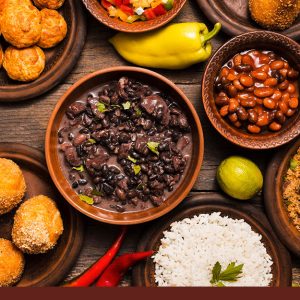
If you’ve looked into a menu for a Brazilian restaurant, or even if you’ve explored Brazil yourself, you might have noticed that rice and beans are everywhere. Whether it’s a bed of rice as the base for a meal, a bean-based dish like feijoada making National Dish status, or just heaping piles of both as optional add-ons to any meal, they’re ubiquitous.
But why?
To answer that question, we need to look into Brazil as a country and the history of food in South America.
Table of Contents
The Simple Answer
Let’s start off with something simple and address the actual question in the title. Why do Brazilians eat rice and beans with steak?
Answer: because we eat rice and beans with darn near everything!

Sometimes, the answer lies in cultural tradition. Rice and beans gained popularity for some reason at a turning point in the history of the country, and the tradition has stuck, with generation after generation learning to love the popular staples, reinforcing itself throughout history.
The fact is, rice and beans are staples for a reason. They’re cheap, they’re filling, they’re neutral enough to be flavored in a thousand different ways, and they can be processed and repurposed in many more. It’s easy to keep them on hand and make a batch of some kind with nearly any meal.
As for why it’s rice and beans in Brazil, as opposed to other similar staples like quinoa, potatoes, corn, wheat, simple pastas, or another grain, that’s a matter for cultural history.
Why Rice and Beans?
There are a lot of reasons for this, none of which are wholly responsible, but all contribute to the cultural tradition.
Fuel for the Day
One of the big reasons stems from the Brazilian meal balance. Up here in the United States, most people enjoy a relatively light breakfast, a hurried mid-day lunch, and settle in for a larger, heartier meal for dinner.
In Brazil, the balance is different. Breakfast is light, enough to carry coffee and start the day. Lunch is the biggest meal, a break when morning work has brought that hunger to the fore, and it’s the largest and heartiest meal to provide fuel for the rest of the day. Dinner, in contrast, is lighter and as much about socialization as it is the food.
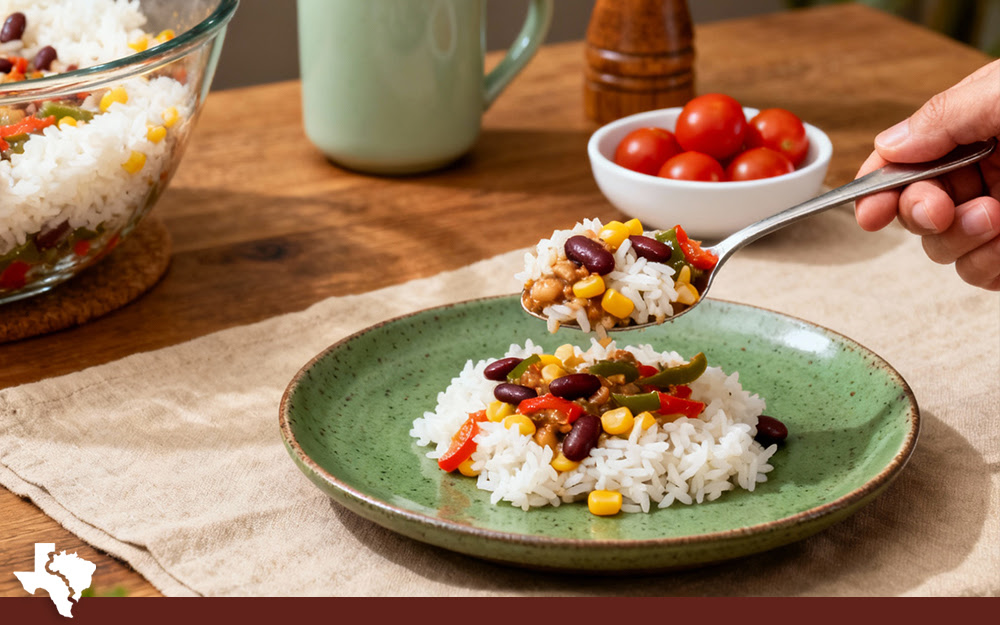
Lunch has to fuel people for the rest of the day, and what better way to fuel them than with staple foods? Rice and beans are high in dietary fiber and healthy protein, while also being relatively low in things like sugars that would make you crash shortly after eating. It’s filling, it’s fueling, and it keeps you going.
A Cheap Staple
It really can’t be overstated how valuable having some form of cheap nutrition is. It’s not just about Brazil, either; everywhere in the world, whatever the most popular food item is, there’s a pretty good chance that it at least started out as the most broadly available, cheapest possible ingredient. Rice is one of the most globally available, a staple throughout Asia in particular. Beans of some variety are common throughout Africa. North America took wheat and corn to new heights.
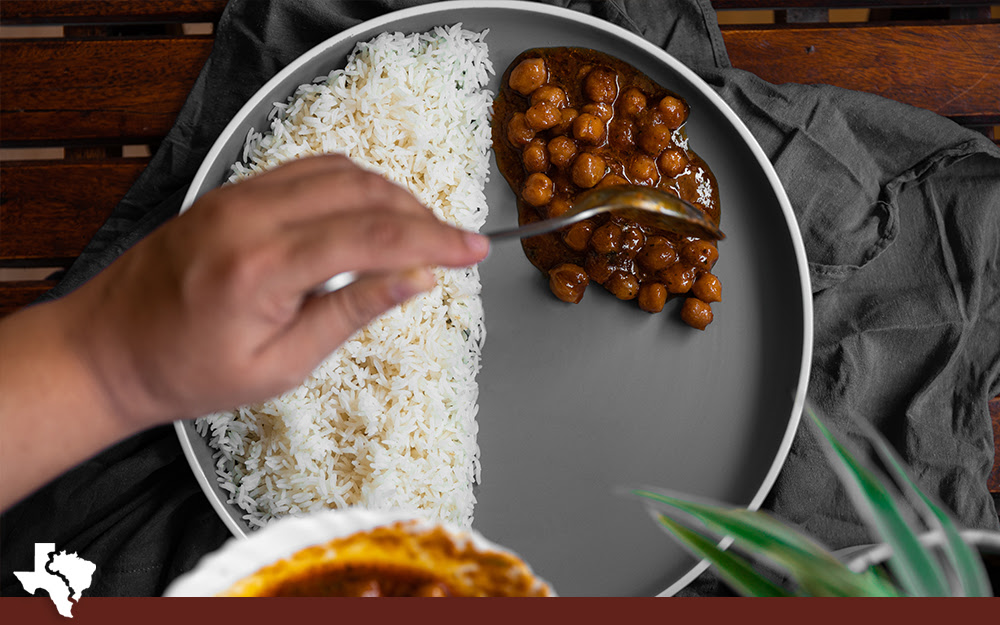
Brazil’s history with rice and beans is fascinating, but in the end, they were an enduringly cheap staple that anyone and everyone could both afford and enjoy. Eating it alongside steak might not have been as common, but some protein to accompany it (and a veggie on the side) would make for robust meals all across the social strata.
A Flexible Addition
Part of the power of rice and beans as the base for a meal is that they’re both relatively simple, neutral, flexible staple items. They can be cooked in many different ways and flavored in many more, so with these two items, anything else you have available can be highlighted.
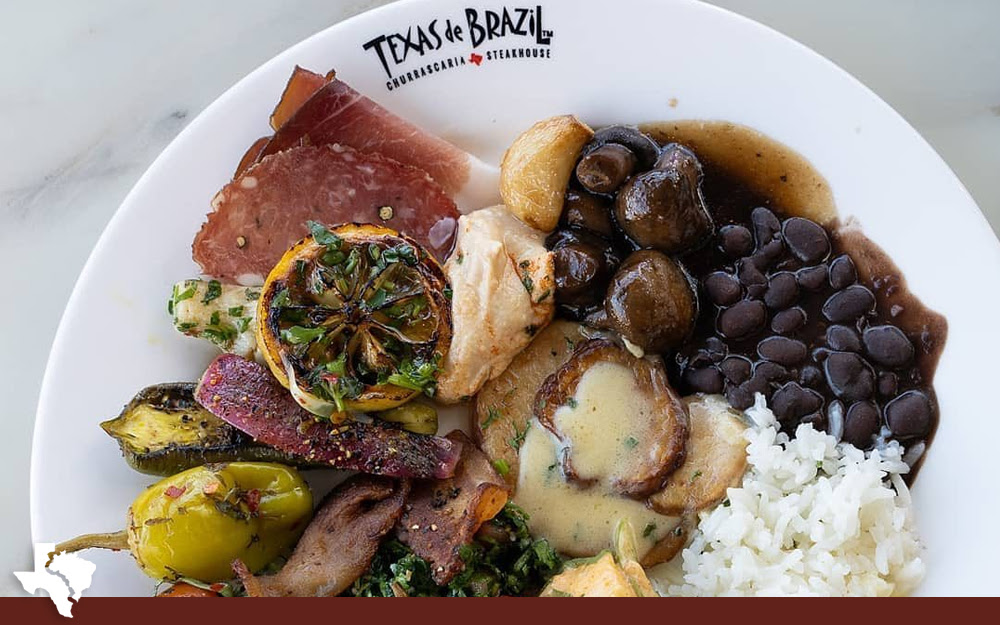
Whether it’s a simple rice dish with onions and garlic, beans cooked with little more than salt, or an elaborate stew or dish like feijoada, they can be cooked in endless ways.
A Look Through History
Why did rice and beans end up the two staples for Brazil? It’s fascinating, especially because even other nearby countries don’t share the same pairing. Argentina is big on rice, but not so much on beans. Beans reign heavily in Central America, while rice stands tall throughout South America.
Beans are particularly interesting because the specific beans being used are not necessarily the same beans Brazilians enjoyed throughout history. Many centuries ago, as far back as even thousands of years ago, native beans originally from Peru made their way to Brazil. The earliest mentions of beans of some variety come from the 1600s.
But they were hardly considered a staple. Beans at the time weren’t the ubiquitous food item they are today. Indigenous peoples of Brazil had plenty of other staples to rely on, and while they certainly enjoyed beans from time to time, they weren’t everywhere.
As with many food traditions, the use of beans throughout Brazil stems from colonization. In the 18th century, colonizers needed some kind of staple food to carry with them. Something that they could bring in, that would be hearty and preservable, that could grow in the climate they were exploring. In this case, beans fit the bill.
Beans also carried over along with influences from Africa, with traditions brought over by slaves. Black-eyed peas (a kind of bean) are especially popular in North and West Africa, and consequently, in southern Brazil, where many of those culinary traditions were carried over.
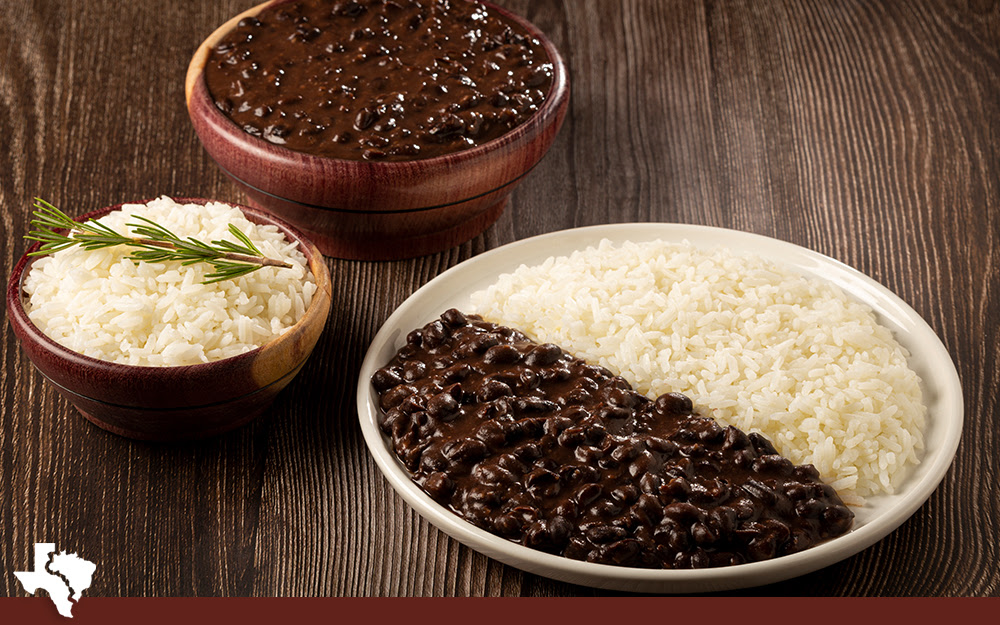
One interesting fact is that, in the late 1800s and early 1900s, beans were as much of a status symbol as a staple, in a negative way. The wealthy and powerful would often avoid beans because of their associations with the poor and underclasses.
These days, of course, beans are readily enjoyed by everyone. That’s not by mistake or coincidence, though. In fact, it was a concerted effort by writers, artists, and cultural powerhouses who sought to distinguish Brazil from other countries. By making beans a nationally identifiable signifier, rather than a class signifier, they sought to make something uniquely Brazilian.
Rice has a similar history stemming from colonization, but from a different direction. Where beans were carried over by the Portuguese, rice came from Asian settlers. At least, the rice we commonly use today; native rice existed, but was somewhat superseded by Asian rice. There’s a lot to say about Brazil’s native red rice, but it’s a bit beyond our discussion today.
Rice has proven to be easily cultivated in climates like Brazil’s, so of course, it expanded rapidly and became just as much of a staple there as it has elsewhere. It’s not a stretch to say it’s probably one of, if not the, most consumed grain in the world. Only grains like wheat give it a run for its money, and grains like corn (or crops like sugarcane) only beat it out because of their use as processed ingredients.
Overall, Brazil’s seeming obsession with rice and beans isn’t all that unusual on a global perspective, so much so that “rice and beans” even has its own Wikipedia article for being such a commonplace combination.
Bringing Home the Rice and Beans
If you’re interested in adopting more culinary ideas from Brazilian food traditions, we’re happy to help. Obviously, you can swing into your nearest Texas de Brazil and try staples like our white rice or feijoada. But we’ll also give you recipes you can use to make some of them at home.
First up is the basic Brazilian white rice. This is the easiest possible version of white rice you’ll find pretty much everywhere you go in Brazil.
One key to making rice in Brazil is that Brazilians, in general, don’t like sticky rice outside of specific uses like sushi. The general rice dishes we make either use long-grained rice, wash the rice heavily to remove starch, or both. The goal is a rice that readily absorbs flavors but doesn’t clump together.
The simplest possible Brazilian white rice recipe just uses an onion, a ton of garlic (at least two heads), and some oil to make something called refogado. Processing this all into a paste makes for an easy flavor enhancer that goes in rice; two cups of rice to a tablespoon of refogado.
White rice with onion and garlic; what could possibly be simpler or more delicious?
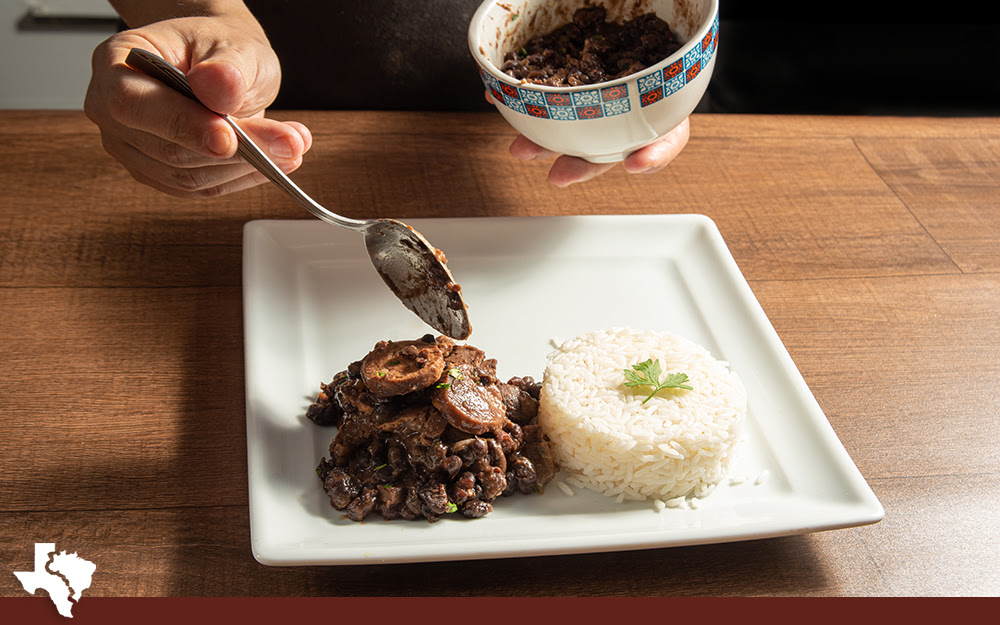
A more elaborate rice dish you might see on menus as an item of its own is Arroz Carreteiro, a rice dish made with leftovers. Also known as the wagoner’s rice, the dish comes from the people who had to carry their foodstuff with them and could only use what was available, making it a flexible dish with a consistent base for nutrition.
In the case of our recipe, the dish calls for barbecued meat, shredded or cubed for easy stewing, along with onion, bell pepper, garlic, eggs, herbs, and some Parmesan cheese. The end result is a hearty stew. The full recipe is available above, of course, but the key to the dish is that you can add any leftovers you want to make a delicious meal and use up food that might otherwise go bad.
As far as beans go, it’s impossible to discuss bean recipes without bringing up feijoada. The black bean stew using smoked meats is a hearty and filling addition to any Brazilian meal, and it’s a staple dish most Brazilians enjoy on a regular basis. Our feijoada recipe uses Brazilian sausage (which you can buy in our market if you can’t find it locally), along with additional beef, bacon, the beans (of course), tomato, onion, garlic, and spices.
Another classic option for beans in Brazil is Feijao Tropeiro, the cattleman’s stew. This has similar origins and serves a similar purpose to Arroz Carreteiro, a traveling food meant for the people who had to carry their ingredients with them. Our recipe is fairly simple and easy to make at home, but again, you may need to seek out certain ingredients like our Brazilian sausage to make it as authentic as possible.
Experiencing Brazilian Meals with Rice, Beans, and Steak
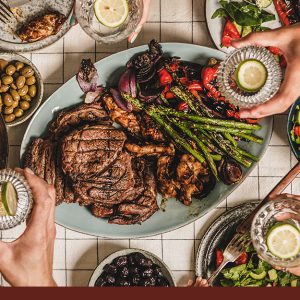
There are three ways you can have a great Brazilian meal with steak, rice, and beans.
The first is to go to Brazil. While most of the meals you get won’t involve steak, any meal involving steak is certainly going to have rice and beans on the side.
The downside, certainly, is having to hop on a plane and fly to South America for some food. While gastrotourism is incredible and Brazil has a ton to offer anyone willing to visit, it’s a sizable hoop to jump through just to enjoy a good meal.
The second option is to do it all yourself. We’ve written before about everything you need to cook churrasco at home, and we know many of you are more than happy to fire up the grill and give it a try. It’s tricky using the grills that are commonplace in American households, but it can still be doable.
Add that to the recipes above, and you can spin up a whole meal of steak, rice, and beans right there at home.
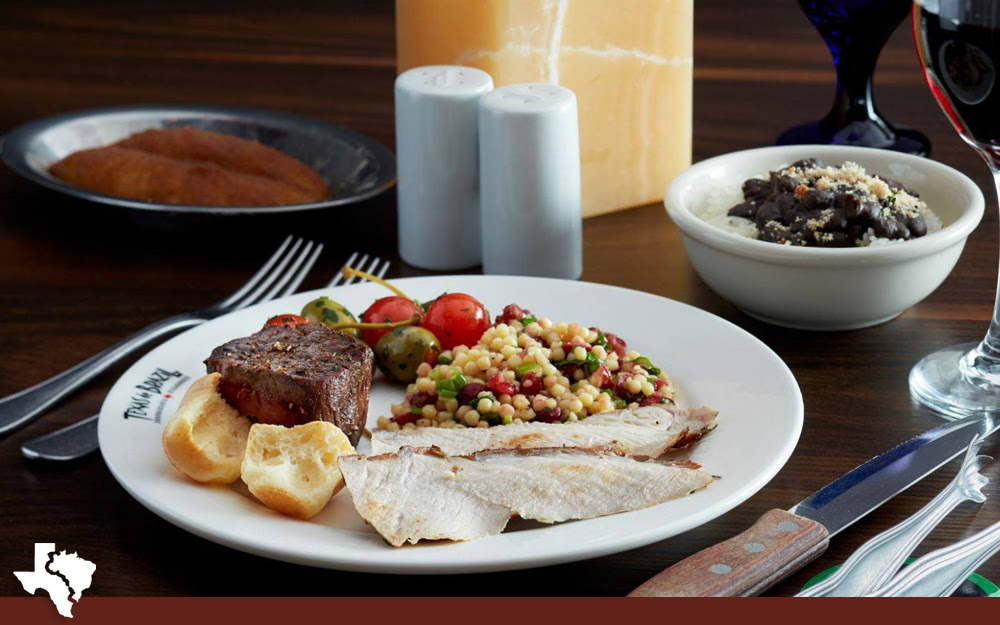
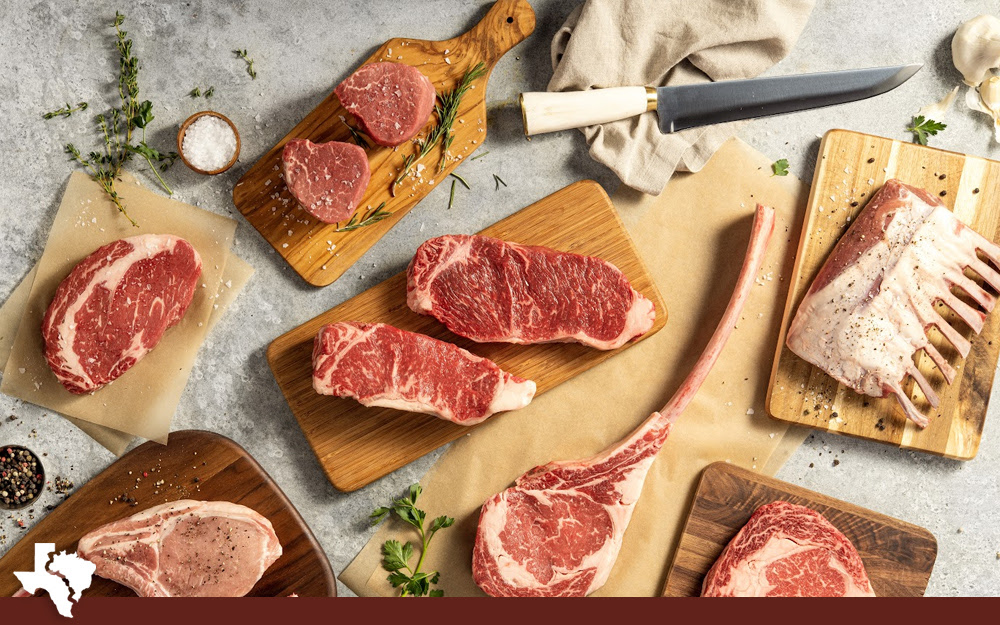
If you don’t have access to the right kinds of grills and other supplies, or don’t have the time or inclination to make it at home, that’s also understandable. We’re happy to sell you some of the ingredients and supplies from our butcher shop and market, but we can’t get you everything you would need, just some of it.
That’s why the third option is to let us do it for you.
Obviously, the easy route is to visit your nearest Texas de Brazil location. With dozens of locations across the country, there’s one near you that you can visit and enjoy authentic Brazilian food and traditions, without the plane ticket.
Alternatively, you can contact us for catering. We’ll be happy to bring fresh churrasco, rice and beans, and other Brazilian classics right to you. Whether it’s an oversized takeout or a whole shindig, we can provide food Brazilian-style for your gatherings. Just say the word!