 Your Privacy Choices
 California Privacy Notice


Brazilian vs Argentinian Chimichurri: What’s The Difference?
South American cuisine, especially in the areas around southern Brazil, Paraguay, Uruguay, and Argentina, heavily centers around beef. Though the names of the cooking methods vary – churrasco versus asado, for example – the concept, and the food we enjoy, is strikingly similar.
This even goes all the way to the sauces and other accoutrements of a delicious barbecued meal. Everyone from the gauchos of southern Brazil to the similar group of cowboys in Argentina has a long culinary history of enjoying a pungent green sauce alongside their fresh beef.
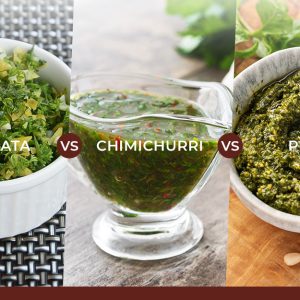
The star of the show is chimichurri, something we’ve talked a bit about before. As one of the most popular green sauces in Brazil, chimichurri is actually Argentine in origin. And, while national borders often don’t matter that much for culinary traditions, the path of history has diverged, and the modern recipes for Argentine chimichurri and Brazilian chimichurri are a little different.
How different? See for yourself.
Table of Contents
What is Chimichurri?
Chimichurri is a green sauce originally created in Argentina, but which has spread all around the world as a popular accompaniment to a variety of dishes. It’s even common in North America, though it’s not as omnipresent as it is in South America.
The most common form of chimichurri is based around parsley, chili peppers, garlic, and vinegar, with a handful of other ingredients for added flavors. Don’t worry; we’ll give you recipes below. We’re just giving you an overview now.
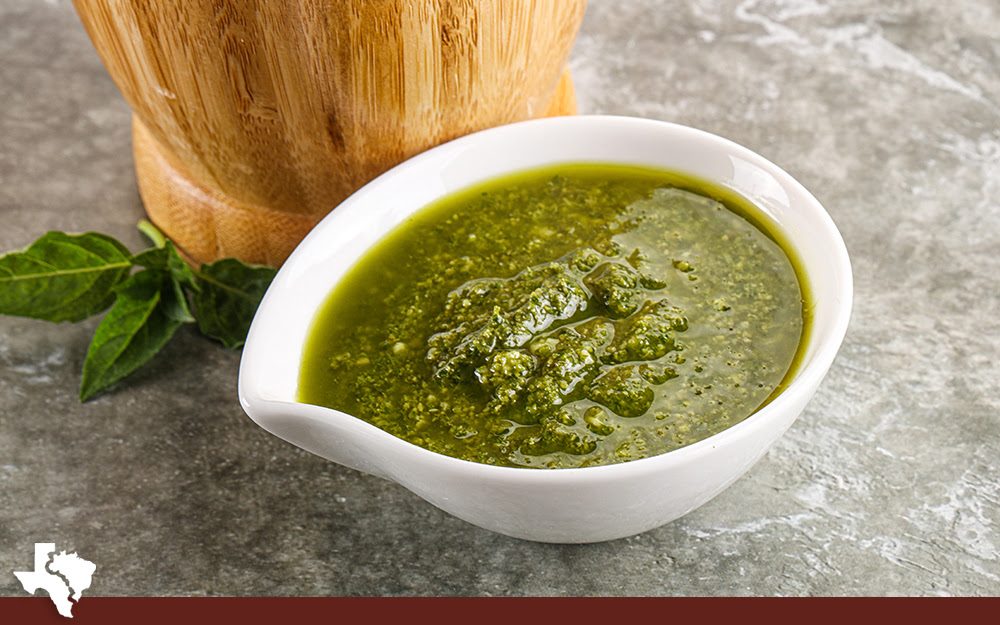
The origin of chimichurri is… not disputed, but a little hazy. It’s definitely from Argentina originally, but the specific mixture has likely changed over the centuries. The name, though, is where the real dispute lies.
For one thing, there are a bunch of false etymologies, which are stories made up to explain the name with no historical backing. Some common ones are corruptions of English words, like “gimme curry”, which doesn’t even really make sense when you think about it, given the history of the sauce.
A couple of similar, more plausible origins come from a pair of terms that both mean something like “noise” or “hubbub”; the Spanish word chirriburri and the Basque word zurrumurru could have potentially been morphed into chimichurri.
For our money, the most likely is a different Basque word: tximitxurri. This word means “hodgepodge” or, more narrowly, “a mixture of several things in any order.” It’s phonetically the closest. A mixture of ingredients in no particular order? Sounds like a sauce to us! Of course, without a time machine or uncovering some long-lost writings, we’ll never know for sure.
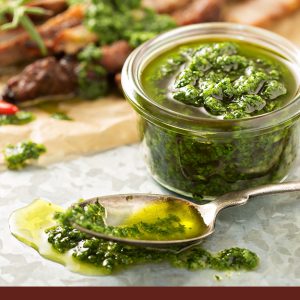
Whatever the origin, chimichurri is an herbal green sauce with pungent notes of garlic and a hint of spice from chili peppers, with a vibrant backing of zesty lemon or vinegar and a base of oil to hold it all together. It’s culinarily fairly unique, it’s immensely delicious alongside some well-cooked beef, and it’s no wonder at all that it has spread far and wide.
Exploring Argentine Chimichurri
If you ask anyone from South America what their favorite chimichurri recipe is, you’ll get a lot of different answers, and those answers can be very regional. While there are thousands of family variations and regional versions of the delectable green sauce, the most traditional version comes from Argentina, where the sauce was originally invented.
The specific recipe for the most traditional Argentine chimichurri is hotly contested, so we’re not going to try to zero in on whatever is the canonical sauce. Instead, we’ll talk in more general terms and discuss what goes into the Argentine chimichurri before looking into the Brazilian version. Stay tuned later for recipes!
Argentine chimichurri centers around a few key ingredients.
- The herbs. The majority of the herbal content of the sauce is parsley, and the rest is oregano. The exact proportions can vary; we’ve seen everything from 2 tbsp oregano and 3 tbsp parsley to 1 cup parsley and 1.5 teaspoons oregano. It’s quite a matter of taste, but parsley should always be greater in quantity than oregano.
- Garlic, of course. Garlic is a key component to any chimichurri; if there’s no garlic in it, it’s not a chimichurri. How much you add can depend on the strength of your garlic and whether or not you’re using fresh garlic, pre-minced jarred garlic, or something like garlic powder.
- Chili pepper. Argentine chimichurri is very much not a spicy sauce, but it has that hint of spice to it from a little bit of red pepper. Red chilis, in low amounts, are all you really need.
- Salt. A traditional Argentine chimichurri actually uses a brine called salmuera, but most modern recipes just add some salt. We’ll discuss this a bit more in a moment.
- Oil. Depending on how richly flavored your oil is, you can use an olive oil, or you can stick with a more neutral vegetable oil. Sometimes, a powerful oil can dominate the flavor of the sauce; that’s a sign of a poorly-done chimichurri, in our book.
- Vinegar. The acidic kick of vinegar adds a ton to the depth of the final sauce. You’re going to want red wine vinegar (no other will do) and usually keep it to a proportion of one part vinegar to three parts oil.
Some recipes include a hint of black pepper. This tends to augment the spiciness of the red pepper, with a little of its own peppery kick, but it’s not necessary or necessarily traditional.
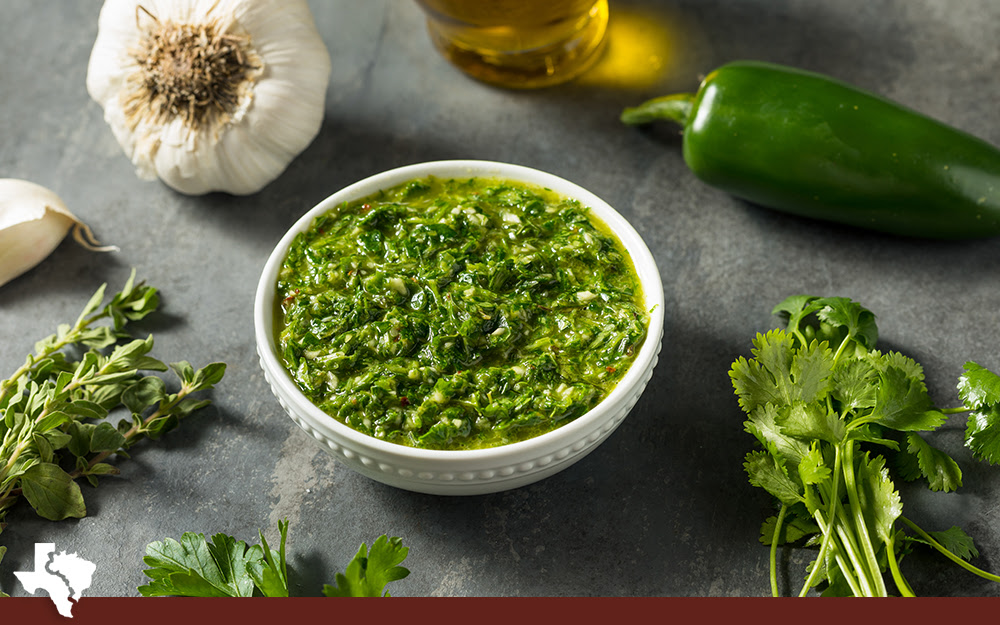
So, what was that about salmuera?
In Argentine cuisine, salmuera is a saltwater brine used to brine meats before cooking. It’s also usable as an element in chimichurri, but you have to be making a particular kind of chimichurri.
This goes back to one particular discussion: do you use fresh herbs or dried herbs? A lot of modern recipes call for fresh parsley but dried oregano. The “roadside food cart” style of chimichurri you find in Argentina is almost always going to be made with dried herbs, while the more homemade or fancier, upscale restaurant-style chimichurri is more likely to be made with fresh herbs.
If you’re using dried herbs, the best way to punch up the sauce is to rehydrate them before using them. To do that, you can use salmuera, rather than just water. This helps infuse the salt more thoroughly into the sauce as well, to enhance the flavors of every part of it.
On the other hand, if you’re using fresh herbs, there’s already plenty of moisture there, so adding water will just dilute the sauce.
Both of these options are plenty traditional, so it really comes down to what you want and what ingredients you have available to use.
A Recipe for Argentine Chimichurri
We promised recipes, so here’s one: a recipe for a fairly traditional Argentine chimichurri. Adjust proportions to suit your tastes and the ingredients you have available to you.
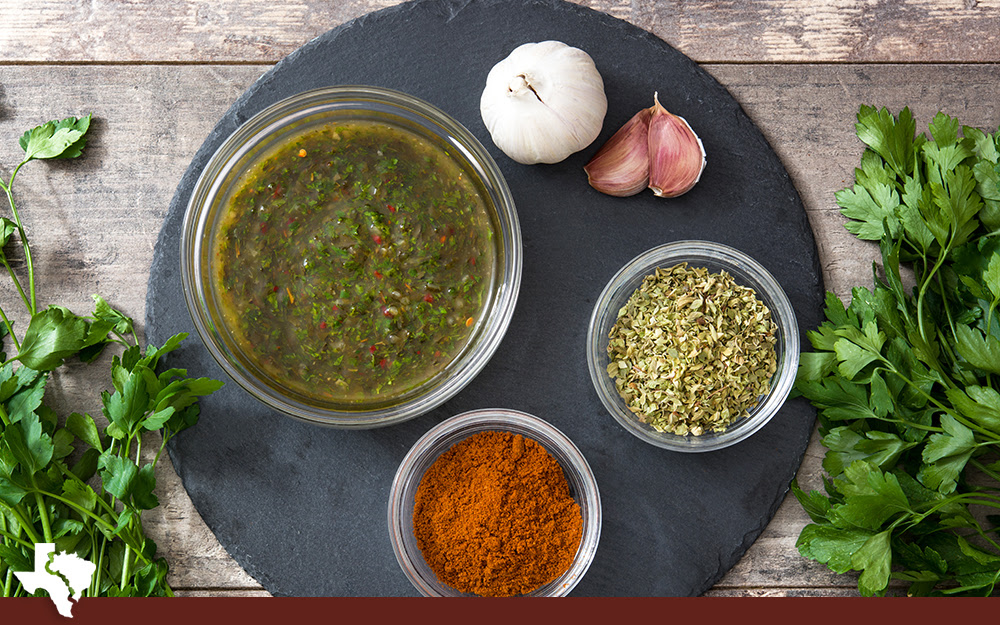
Ingredients:
- 1 Tablespoon of dried mild chili flakes.
- 2 Tablespoons of dried oregano.
- 3 Tablespoons of fresh parsley.
- 1 Tablespoon of fresh minced garlic.
- Water
- Salt (to taste)
- Light Olive Oil
- Red Wine Vinegar
Steps:
- Mix the oregano and chili flakes in a small bowl. Note that if you can’t find mild chili flakes, use less of the chili; you don’t want the final sauce to be overly spicy.
- Add just enough water to the dry ingredients to get them hydrating. Avoid adding too much water and err on the side of too little. Add salt here as well, going light if you aren’t sure how much you want. Start around a teaspoon.
- Let this mixture sit for at least 2-3 hours, if not overnight.
- Add the garlic and parsley to the mix and mix it up well.
- Add just enough oil to turn this into a sauce. You want oil to be a base, but you don’t want so much oil that the ingredients are swimming in it. Keep track of about how much oil you use.
- Add vinegar. Stick to a ratio of about three parts oil to one part vinegar, so if you add one tablespoon of oil, add one teaspoon of vinegar.
Your sauce is now ready to go! You can let it sit a while longer to further augment the flavors, or use it right away. Make note of what you think of the sauce and alter it later if necessary to suit your tastes.
Exploring Brazilian Chimichurri
Chimichurri might have originated in Argentina, but for many of us, we feel like the Brazilian version perfected the sauce.
The history of Brazil and Argentina is deeply connected, especially in the far south of Brazil, where the gauchos stretched across the borders and brought their culinary traditions with them.
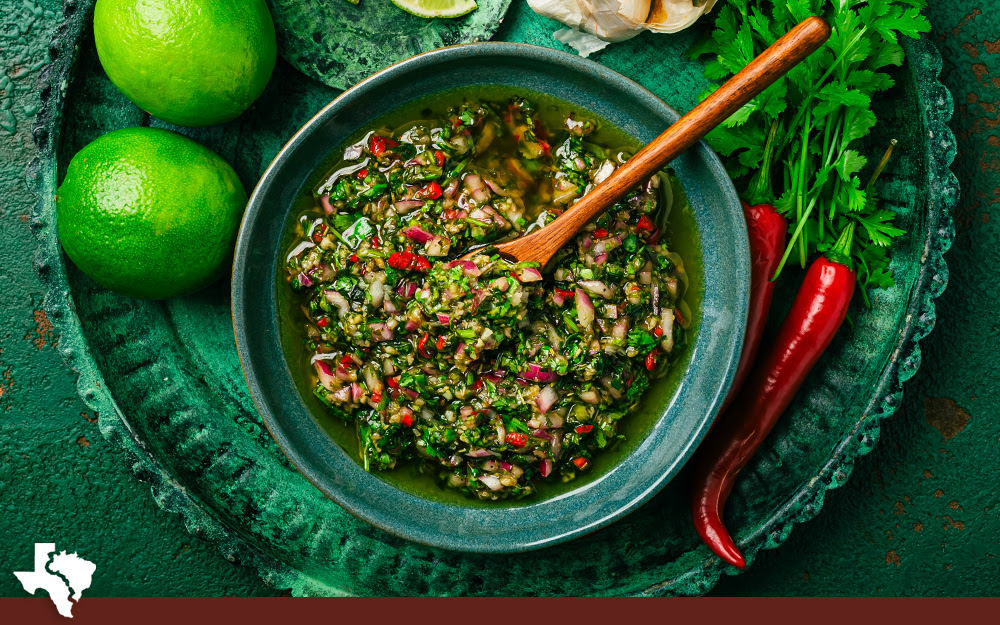
As cultures diverge and evolve, so too do their traditions, and the Brazilian version of chimichurri is no different. Our version has a few key differences compared to the Argentine version.
- The herbs. While parsley and oregano are still the stars of the show, Brazilian chimichurri adds a key third herb: cilantro. Often, this is in a 1:1 ratio with parsley, so if you add 2 tbsp of parsley, add 2 tbsp of cilantro as well.
- The vinegar. Or, more specifically, the lack of vinegar. This is a matter of preference, but a lot of Brazilian chimichurri sauces use lemon juice either in place of red wine vinegar or again in a half-and-half arrangement. Some do just use vinegar, though. We personally love the lemon in ours.
- The spice. Brazil isn’t actually a big fan of spice, so usually our chimichurri is light on the red pepper, but we do often have a little more than what you’d get in an Argentine chimichurri. For the really spicy stuff, you’ll want the Latin American version that has jalapenos in it.
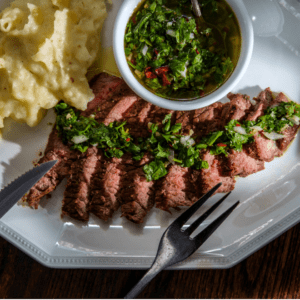
Other than all of the above, the sauces are pretty similar. They’re tangy, garlicy, oily, full of flavor, and go great on churrasco. There’s a reason we offer it in our restaurants!
A Recipe for Brazilian Chimichurri
This one is a recipe from close to home, and we don’t just mean Brazil. It’s a recipe we use in our restaurants themselves, so if you’re ever visiting your local Texas de Brazil and like what you try, here’s how to make it yourself.
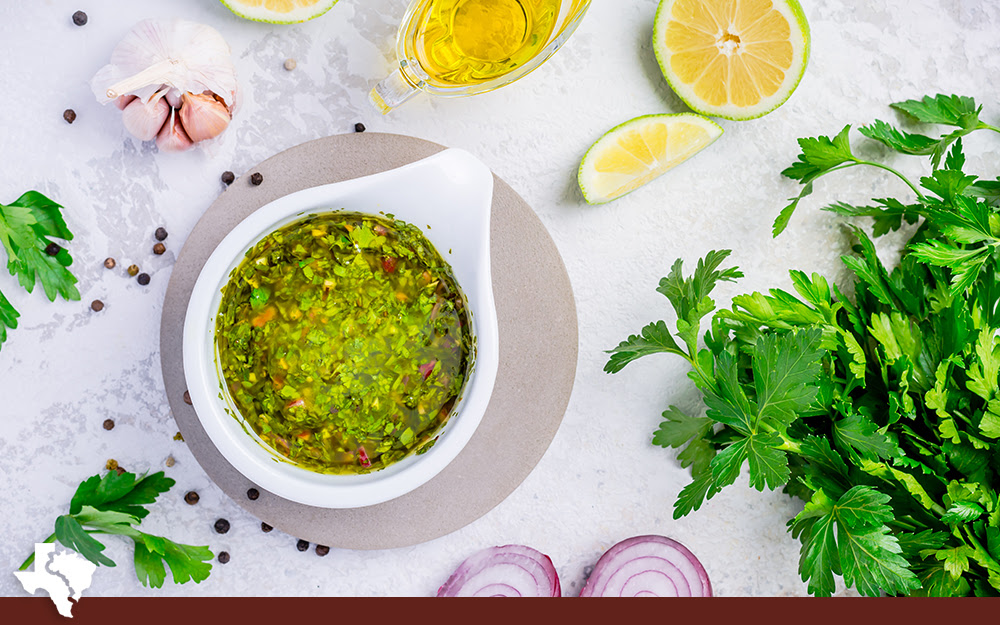
Ingredients:
- 1 Cup of extra virgin olive oil.
- 1/4th Cup of lemon juice.
- 2 Tablespoons of minced garlic.
- ½ Cup of fresh parsley.
- 1/4th Cup of fresh cilantro.
- 1 Tablespoon of dried oregano.
- 1 Tablespoon of red pepper flakes.
- Salt and pepper, to taste.
Steps:
- Add the garlic to a food processor and pulse to mince it, if it’s not already minced.
- Add the parsley and cilantro to the garlic in the food processor and pulse until it’s all chopped, scraping down the sides as needed for a uniform chop.
- Add the oil, lemon juice, oregano, red pepper, salt, and pepper to the mix. Pulse a few times to mix, but don’t over-process it into a paste.
- Taste and adjust the flavors to suit your needs.
- Enjoy the sauce with your favorite churrasco, or even use it to marinate meat before cooking.
Some people will call this less authentic because we use a food processor, but that’s just a shortcut. You’re free to chop everything up by hand and mix it all in a bowl with a spoon if you like; it won’t make a huge difference either way.
You’re also free to use half-and-half lemon and vinegar, or use vinegar in place of lemon, if you prefer the flavor that way. We like the brightness that the lemon adds, so we use it that way.
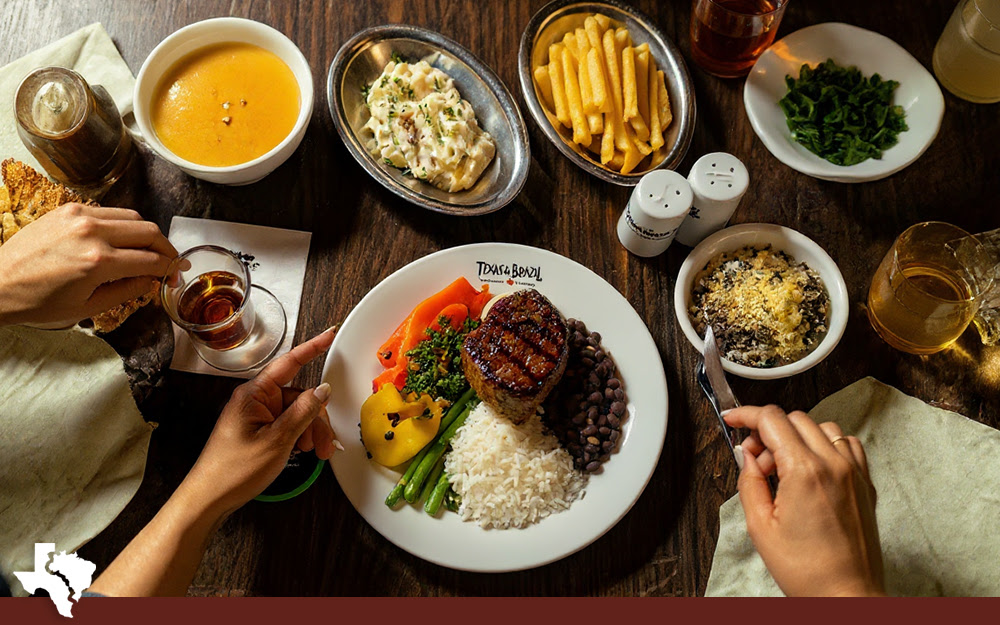
If you want to see how good this sauce is before you try it out at home, stop on by! Your nearest Texas de Brazil is sure to have it on hand to accompany some of the best churrasco you’ll have ever tasted, and all you need to do is visit. We look forward to it!