 Your Privacy Choices
 California Privacy Notice

Charcoal and Wood Types for Authentic Churrasco Grilling
Authentic Brazilian churrasco, the historical stuff you would find on the open plains of southern Brazil, used whatever fuel was available to cook their meat. In the southern Pampas plains, that meant dry grasses, cow chips, and wooden fuel that the gauchos carried with them from other areas. Further afield, away from the treeless plains, hardwood trees could be chopped and used for fuel.
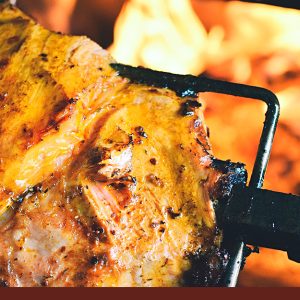
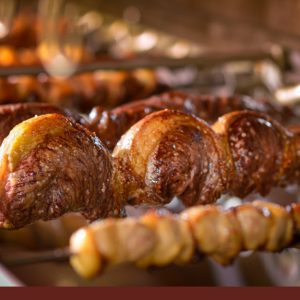
Modern churrasco, of course, is cooked over more controlled flames in grills established on beaches, in restaurants, and in back yards across the country. There are a lot of different ways to cook churrasco, but they all revolve around the high heat necessary to properly sear meat on skewers.
Table of Contents
Charcoal, Wood, or Gas?
If you’re looking to get into making churrasco yourself, or you’re just curious about what we use in the grills at Texas de Brazil, let’s talk about it.
Generally speaking, when you have a grill to fuel, you need to decide what kind of fuel to use. You may be limited by the type of grill, though. You can’t put charcoal in a gas-only grill, and you’re going to have problems if you try to use gas in a charcoal grill. Wood and charcoal can be interchangeable, as long as you understand their different properties.
What Did the Gauchos Use?
As we mentioned in the intro, Gauchos used whatever was available, and often cooked their food over a multi-purpose campfire. It might have been wooden logs, wood chips, charcoal they brought with them, dried dung fuel, or even locally-sourced grasses.
Gauchos were often poor and lived off the land, so there wasn’t a cultural tradition so much as subsistence. They made whatever they had work.
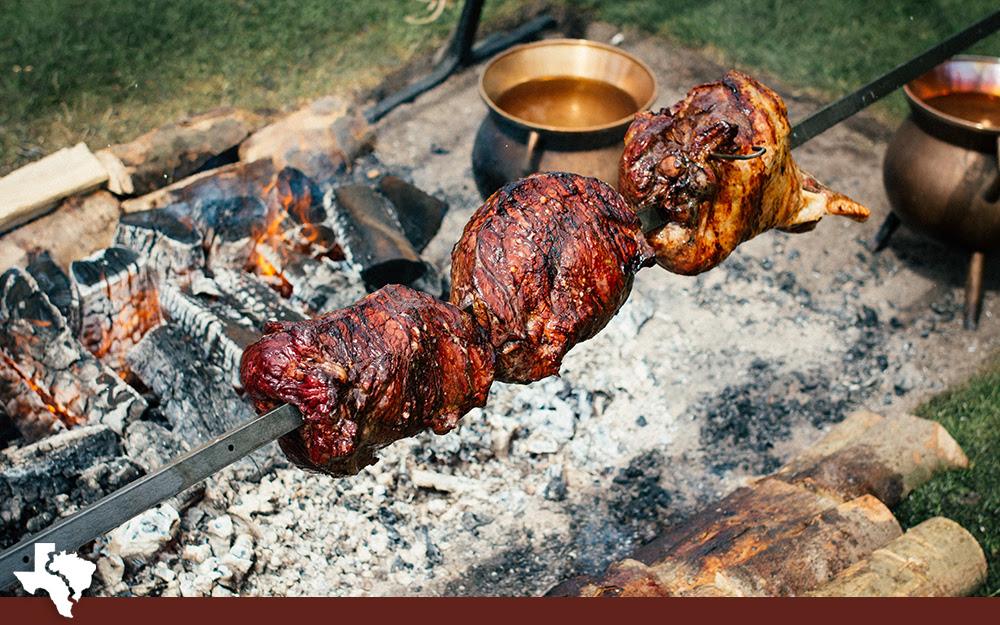
The one thing you can be sure of is that they didn’t use gas. Propane wouldn’t be discovered and used for another two hundred years. While natural gas may have been used in some places (like Greece) many thousands of years earlier, it wasn’t exactly carried around in pressurized bottles at the time either.
What Do We Use Today?
Different restaurants cooking up some delectable churrasco will use different methods. We can’t speak for others, but we use all-natural wood charcoal.
Natural wood charcoal is charcoal made entirely out of a source wood, burned in a low-oxygen environment until it’s converted into pure carbon. While the wood used to make it can affect how it burns, it burns consistently within that profile, so we always know what to expect, and our grills are capable of cooking consistent churrasco BBQ for our patrons.

If you want to cook churrasco at home, what fuel should you use? Let’s talk about the pros, cons, and considerations you should think of for each fuel type.
Gas Fuel for Churrasco
First up, though it’s not the focus of our post, we need to touch on gas. In America, millions of people have gas-powered grills for their BBQ, and you may be wondering if you can cook churrasco with gas.
The answer here is technically yes, but it won’t really be authentic, for a couple of reasons.
One of the biggest reasons is temperature. Authentic churrasco really benefits from burning a fuel that gets nice and hot. You’ll find a lot of recipes online that mention a temperature around 450 degrees F, which is fine, but those are Americanized recipes made to use the grills we all have already.
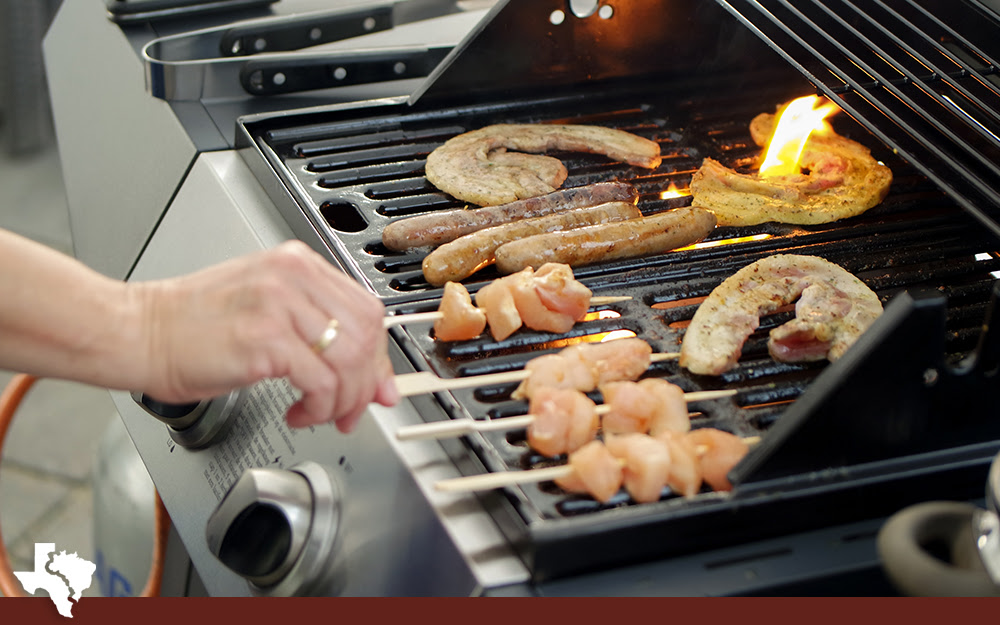
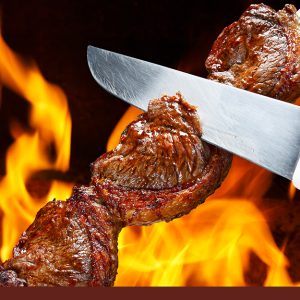
Authentic churrasco usually aims for a grill in the 700-800-degree range. The hot flame allows you to adjust the temperature at which you cook meat by adjusting the position of the skewers. This gives you the ability to get a heavy sear on the outside and a rare inside, or cook different cuts in different positions over the same flame, and you can control it all very precisely.
The biggest issue with a gas grill is that it rarely gets that hot. They often top out around 600 degrees, which is well short of the mark we’d aim for.
How important is this? Well, it really depends on what you’re trying to do. If you want the experience of enjoying a Brazilian-style barbecue but you don’t need it to be super authentic, a gas grill will be fine. You just need to cook meat the right way:
- Coated with coarse salt to infuse the meat with flavor.
- Cooked on a skewer rather than a grill plate or pan.
- Cooked with as little additional flavoring as possible, to enjoy the meat itself.
You can also get around the temperature limitation by using a grill designed to get hotter through controlled use of oxygen. After all, propane is capable of getting up to thousands of degrees with the right fuel-air mixture; it’s how propane torches work. Kamado-style egg-shaped grills do this very well.
So don’t take this as some sort of anti-Hank Hill stance; Brazilian barbecue is just traditionally cooked over either wood or charcoal, not gas.
Wood Fuel for Churrasco
Is wood a traditional fuel for churrasco?
This is actually a bit of a debate.
Authentic, centuries-old, on-the-Pampas churrasco? It used whatever fuel they had on hand. It didn’t really matter what they cooked the meat on; they just needed the fire.
What about today? There are proponents and opponents on both sides of the argument.
Opponents of wood as fuel for churrasco recite the common benefit of churrasco itself: you taste the meat, not the heat. Since churrasco is a celebration of meat, a huge part of the experience is tasting different cuts with as little in the way as possible. That’s why the meat is usually not marinated, usually not spiced, and usually not dipped in sauces.
Note the “usually” there. We Brazilians do love our green sauces, and there are plenty of spice rubs we put on meats at different times and for different recipes. Even here at Texas de Brazil, many of our meats have a spicy rub or other flavoring, though we do have plenty of options for the pure meat enthusiasts.
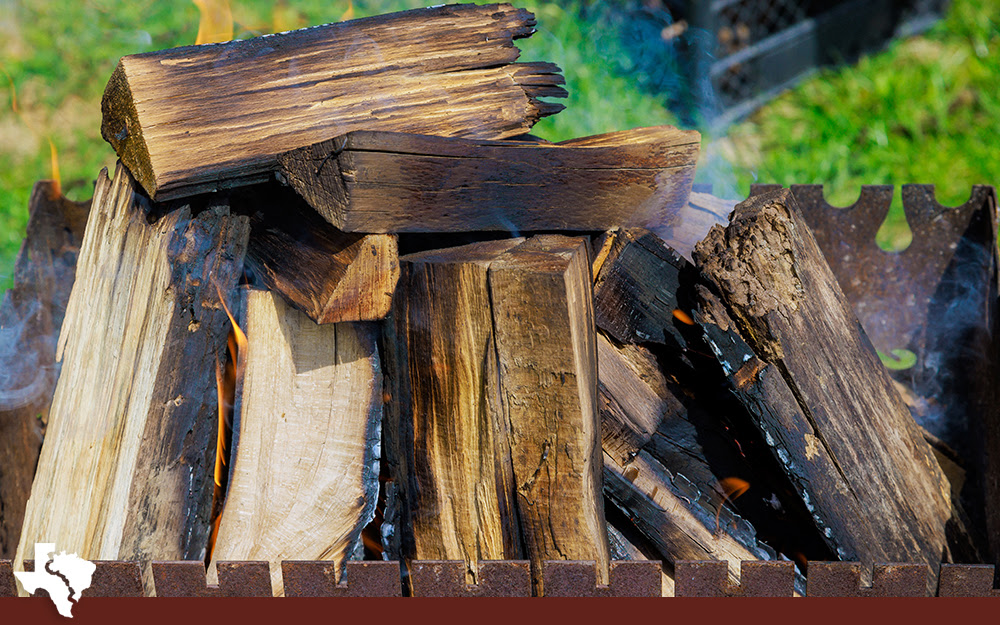
On the other side of the coin, proponents of using wood talk a lot about the quality of flavor and the subtle enhancement added to meat through wood smoke. Different woods have different flavor components, and infusing the meat with the smoky flavors gives an added depth to the meal that you don’t get using charcoal.
To us, the most authentic option is charcoal, which is why we use charcoal in our restaurants. But there’s nothing wrong with using wood! In fact, many churrasco restaurants use a mixture of both, with wood chips to add smoke flavors, or just use wood entirely. And, of course, if you’re making churrasco on your own, and you really want to flavor your meat with oak, apple, or pecan, go right ahead.
Really, though, wood-fired barbecue with all of the nuances of different kinds of smoke is much more of an American thing than a Brazilian thing. That’s why Texas barbecue, for example, often uses something like Mesquite or Hickory. There’s nothing wrong with it, it’s just not quite what we’re after.
Charcoal Fuel for Churrasco
Now we’re getting somewhere!
As we just said, to us, the most authentic option for churrasco is charcoal. It’s also the most reliable option; you don’t have to worry about variances in different pieces of wood, or the hazards of water in a not-quite-dry log, or getting the smoky flavor profile just right.
With charcoal, your fire burns cleaner, and the smoke that is produced isn’t flavored. Cooking meat on a barbecue with charcoal is the best way to get the purest expression of the meat, without anything else getting in the way.
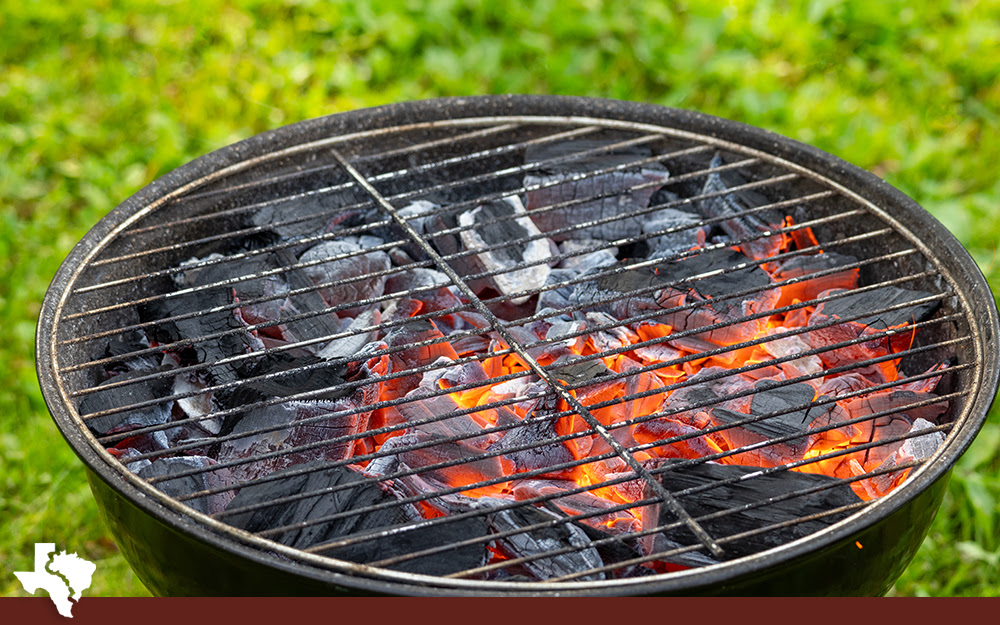
Charcoal comes in two forms: briquettes and lump. Briquettes aren’t actually “pure” charcoal; they’re often charcoal mixed with other ingredients, like sawdust, coal dust, and chemicals that serve as binders to keep their shape. Each briquette is uniform in size, and they catch fire and burn the same way, and are ideal for keeping a specific temperature, around 600 degrees.
Briquettes, because of their additives, tend to leave behind a lot more ash, and the cleaning burden can add up. Maintaining your grill is just part and parcel of running one, though, so that’s not necessarily a bad thing.
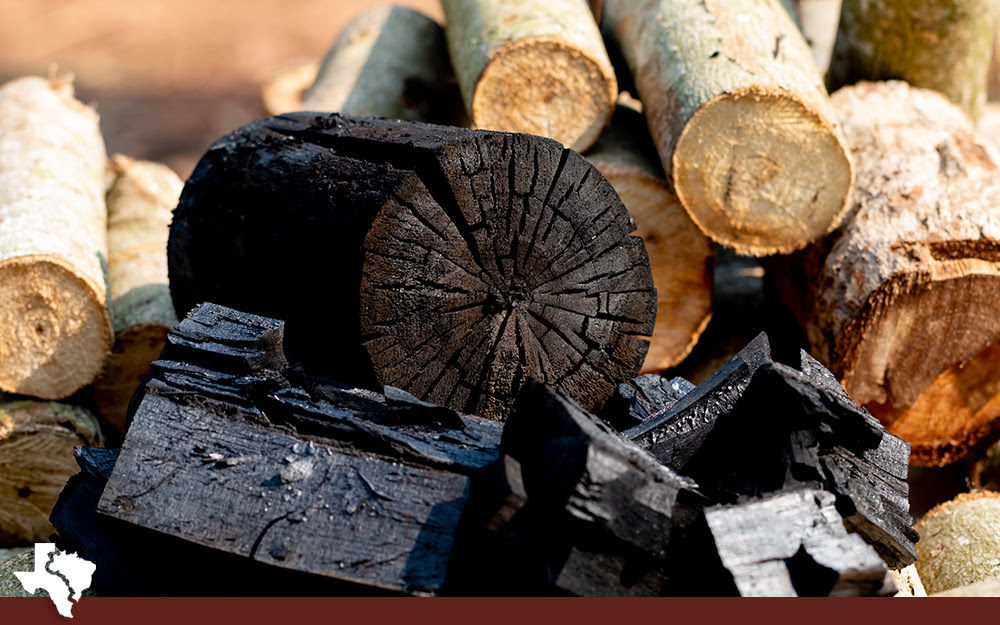
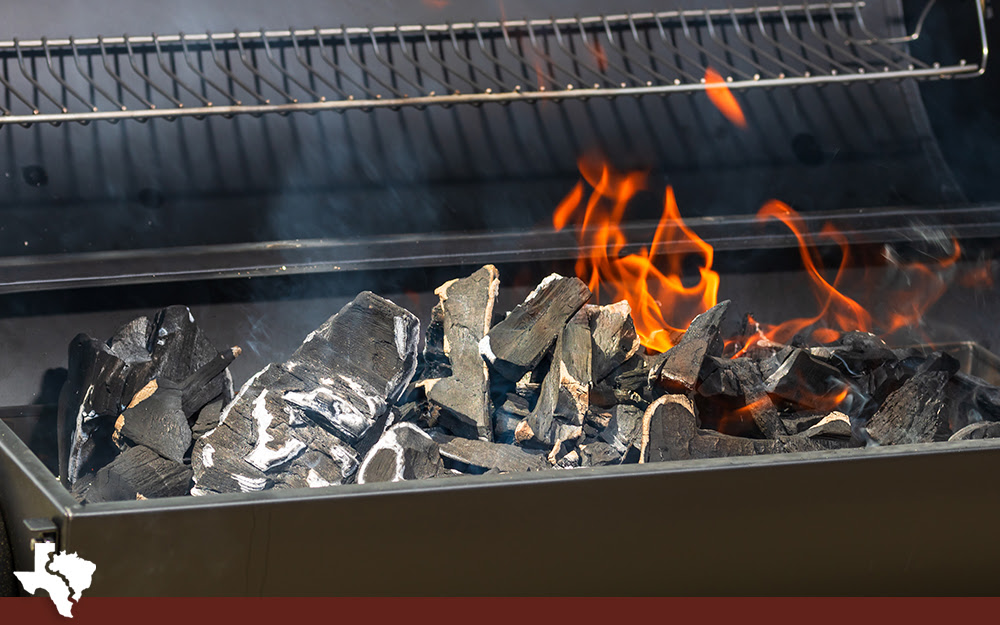
Lump charcoal, on the other hand, is a more natural kind of charcoal. It doesn’t have additives or other ingredients, and it’s irregular in shape because it’s just the result of burning logs without oxygen for so long that they turn into chunks of carbon.
Lump charcoal burns hotter than briquettes, and is ideal for our view of churrasco. Since you can get and maintain a higher heat with clean-burning charcoal, it’s exactly what we’re looking for.
What About Mixtures?
The more advanced a person gets in the fine art of barbecue, the more opinions they’ll develop about their fuel. That’s why top-level questions are about whether to use gas or charcoal, and mid-level discussions center around the type of wood or charcoal.
Advanced-level barbecue chefs have their own blends they swear by. Maybe it’s a bunch of lump charcoal with a handful of mesquite, a handful of cherry, and a sprinkling of oak. Maybe it works in some hickory or some apple. Maybe it’s all pecan all the way. Everyone has their own preferences, from wood chip size to mixture to when it’s added to the fire.
The only thing you can’t really do is mix a solid fuel with propane. The equipment necessary to use one precludes the use of the other, and it can be dangerous if you try to use both at the same time.
That’s not to say you can’t add some wood chips for flavor to a propane grill, but you need to go about it the right way, with the right equipment.
The Right Way to Make Authentic Brazilian Churrasco
So, what is the right way to make authentic churrasco?
Whatever works best for you.
Like we said above: the gauchos weren’t picky. They didn’t have a lot of options out on the plains and used what they could to suit their needs.
The key to good churrasco, though, is as much in the cooking method as in anything else.
You want the best quality meat you can find. Beef is almost always the star of the show, but you can churrasco pork, chicken, and even lamb if you want.
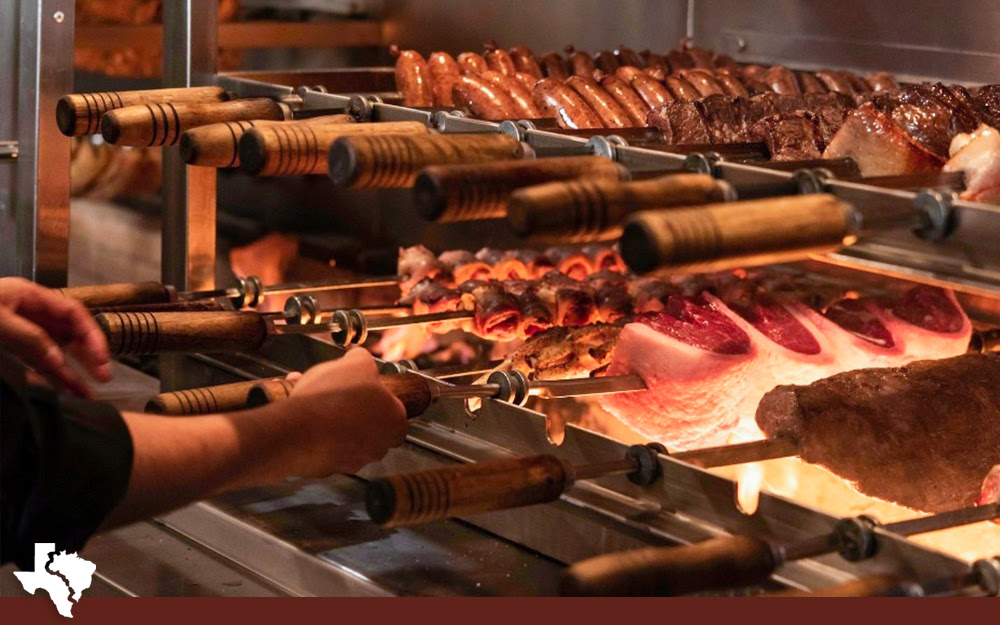
You need skewers. The biggest key to churrasco is making sure the meat doesn’t touch a hot surface. While the Maillard reaction is useful in grilling and searing meat, it’s not what we’re here for with churrasco. No pans, no grates, no foil; we’re cooking on a skewer held over the fire.
You need salt. In Brazil, we use a kind of salt called Sal Grosso, which is a very coarse, almost rock salt. It’s bigger than kosher salt, and you might need to order it if you can’t find it locally. Other kinds of salt won’t do the trick, because a big part of churrasco is getting that salt infusion without leaving it lingering on the surface.
The grill, the fuel, it makes a difference in the finished flavors, but it’s your personal preference and what you have available. You need the heat to cook the meat, and beyond that, it’s what you want out of your churrasco meal.
It’s certainly a lot of work. Most Americans aren’t prepared to cook churrasco, and learning a new skill can be a lot to take in when you have the pressure of a dinner party looming.
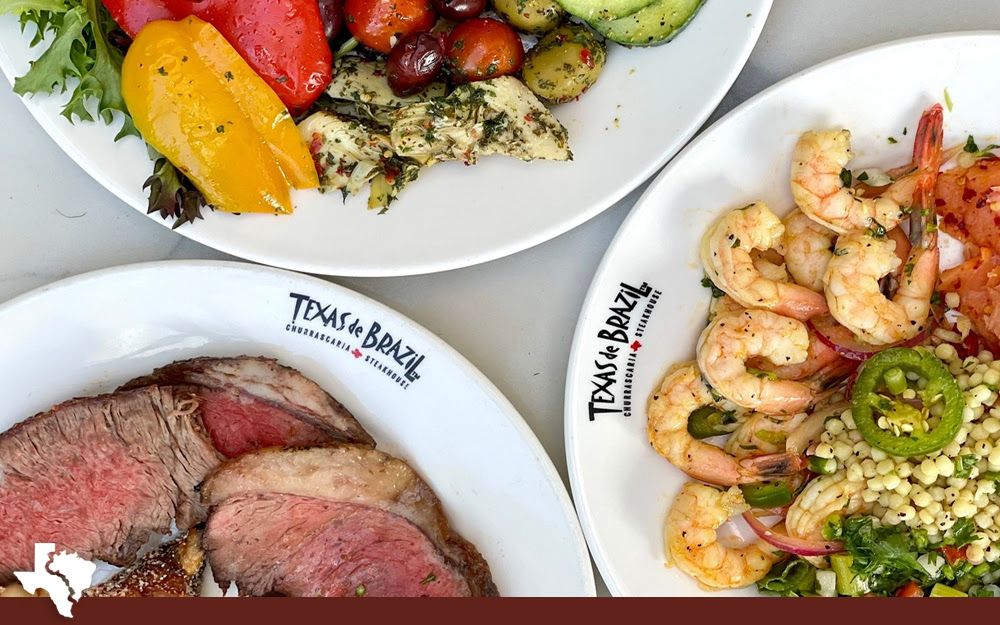
And, when it comes down to it, there’s always one more option: come visit us at your nearest Texas de Brazil location. With a mixture of authentic and traditional Brazilian foods (including churrasco, as well as favorites like feijoada and farofa), and more American barbecue options like our spicy Picanha, there’s something for everyone.
Best of all, you can learn from us. Explore different cuts of meat, see how they’re cooked, and enjoy them without the smoke or the spices getting in the way, and take what you’ve learned to make some on your own.
We’d love to have you, so stop on by!