 Your Privacy Choices
 California Privacy Notice


How to Pronounce Picanha and Impress Your Server
Different people have different outlooks towards words they don’t know. Some just say whatever they think it should sound like and often get things comically wrong. Others do their best with the knowledge they have of other languages and may or may not be close to the mark. Some do their research and learn how to properly pronounce a word before using it.
When you visit a place like Texas de Brazil, the expectations are very low. We don’t expect you to learn Brazilian Portuguese just to eat here, of course. We even keep a lot of our menu items with their English equivalents when we can. Think “Brazilian cheese bread” instead of “pao de queijo” or “Brazilian black beans” instead of “feijoada”. More on that a little later, though.
Still, if you want to immerse yourself in the very basics of Brazilian food names, we may be able to help.
Table of Contents
Setting Expectations
Languages are a tricky thing. If you haven’t experienced a language vastly different from your own, you might not even realize just how difficult they can be. In fact, there are some sounds that people who have learned one language might have trouble even recognizing are different.

A common example is the P sound in pit versus spit. Here, let’s let The Week explain:
“When we say a voiceless stop — “p,” “t,” “k” — at the very start of a stressed syllable, we say a puff of air after it. If we say it elsewhere, we don’t. Try this: hold your hand or a piece of tissue in front of your mouth. Say “pit.” Notice a puff of air after the p? Now say “spit.” And yet we think of the p with aspiration (the puff) and the one without it as the same sound — they’re what linguists call allophones of the same.
In Mandarin, Thai, Hindi, and several other languages, they don’t think of those two p’s as the same phoneme. They use different letters for them, and the difference is often represented in Latin-alphabet transliteration by writing an h after the aspirated one. For example, in Hindi, phal means “fruit,” while pal means “moment.”
There are many different examples of this, where English speakers can’t differentiate between sounds that other languages do. It happens in reverse, too; the L/R confusion in Japanese is a common example.
All of this is to say that when you’re learning a few words of a foreign language to impress a native speaker or even just someone more familiar with the language than you, don’t be surprised if you still don’t quite get it right. You might not even be cognitively capable of hearing the difference between sounds, and it’s not your fault.
Basics of Brazilian Portuguese
Some Americans think that everyone south of the border speaks some variation of Spanish, but that’s not quite true. Brazil’s national language is Portuguese, stemming from the country’s history as a land colonized by Portugal. However, over the decades since, the languages have diverged in much the way that Spanish from Spain and Spanish from Mexico are different. Brazilian Portuguese is still recognizably Portuguese, but there are a few key differences. So, if you know any Portuguese from Europe, you’re on the right track, but there will be some differences.
The Letter ç
One that you’ll frequently see in Brazilian Portuguese is the letter ç. This C with a little tail under it is not a C; it’s a cedilla. It’s used in a few languages, including French, and it softens the C into an S sound.
One of the places you’ll find this letter in Brazilian – and on our menus – is in our cocktails. The spirit we use for our favorite caipirinhas is called Cachaça. It’s not always typed with the ç, but if you want to be accurate with your Brazilian pronunciation, you’ll need to learn it.

The typical Americanized version of cachaça, with a normal C, ends up being pronounced something like “kuh-CHAA-kuh.” This is, however, incorrect. The true Brazilian pronunciation turns that ç into an S sound, making it “kuh-SHA-suh.”
You’ll notice that the “cha” is also softened here; that’s another quirk of Portuguese that can take some getting used to.
The Combination nh
To stick with the cocktail for a moment, let’s go back to the finished product: caipirinha. That “nh” near the end is kind of tricky, right? The American inclination is to put a bit of a stop between the n and the h and say something like “kai-per-in-hah.”
In Brazilian Portuguese, the nh sound is actually more like the American “ny” sound. So, in the cocktail, the final “nha” is pronounced more like “nyah.”

The correct way to say this drink’s name when you order it is “kai-pee-ree-nyah.” The letter I after a consonant like P or R is an E sound, in this case, which is another rule to learn, but it’s one of the least tricky ones you’ll come across in learning the basics of Brazilian Portuguese.
The Letter X
X is a tricky letter in almost any language, and it’s one of the hardest to grasp in Brazilian Portuguese because it’s never just one sound; it’s five different sounds.

These sounds include:
- X as SH; if a word starts with X or the X follows an EN, it’s a “sh” sound like in “shampoo.” Xicara is “she-kah-rah.”
- X as KS; if a word is borrowed from another language but incorporated into Brazilian, this version is used. “Complexo” for complex uses the “ks” noise we’re familiar with in English.
- X as S; a regional variation of #1, sometimes the Sh is actually just S.
- X as Z; another regional variation, sometimes Brazilians use the Z sound from “zen” instead of S or Sh.
- X as Chi; something you see on food menus, the X can be pronounced “chi,” which is actually straight from Greek. It’s also a little bit of a pun; X meaning Chi, an X-Burger is a Chisburger, or cheeseburger. Cool, right?
This is perhaps the single hardest thing to learn in Brazilian, and most people – even many Brazilians – don’t really bother. Just about any pronunciation will be good enough to get your point across.
The Combination lh
Much like nh above, lh also turns the h into a bit of a y situation. The closest comparison in American English is the double L from “million,” where you might say it as “mill-yahn.” If you isolate the ll-ya bit, you get something close but still not really accurate.
You’ll see the lh in a few places. A moderately common one is “Coelho,” which is the word for rabbit. “koh-el-yoh” is a reasonably close approximation of how you would say the word, though it’s not entirely accurate. This one is simply difficult because there’s no easy equivalent.

To make matters worse, some people don’t say it that way. A famous novelist, Paulo Coelho, pronounces his name in a more Americanized way; “koh-el-hoh” instead.
Fortunately, we don’t serve rabbit at Texas de Brazil, so it’s not something that should come up when you’re talking to our gauchos.
All of this is just scratching the surface of Portuguese as we speak it in Brazil, but that’s fine. You’re here to enjoy some good food and show off a little consideration for the culture you’re enjoying, not to immerse yourself in a new language and try to pick up fluency via a menu.
Food Items You Might Encounter, Pronounced
If you go to Brazil, of course, nearly everything you find on a menu is going to be in Portuguese. Here at Texas de Brazil, we’re a Brazilian and American fusion restaurant, and we’ve Americanized some of the foods you’d encounter. That said, some of them retain their Brazilian names, and some have both, so let’s go through what you might see on the menu and how to say it.
Churrasco/Churrascaria, Brazilian Barbecue
First, the overarching term for why we’re all here: the barbecue! Churrasco is the word for barbecue, and Churrascaria is the word for a barbecue restaurant like Texas de Brazil. Fortunately, this one is pretty easy to say, except for one detail: where you put the emphasis.
To say it, say “chur-AS-koh.” Technically speaking, the “ch” is actually more of a hard “sh” sound, but the “ch” is close enough. You could put a bit of a T in there, as in “tshur-AS-koh,” if you wanted, but don’t make it too hard. Really, the middle syllable being the emphasis is the important part.
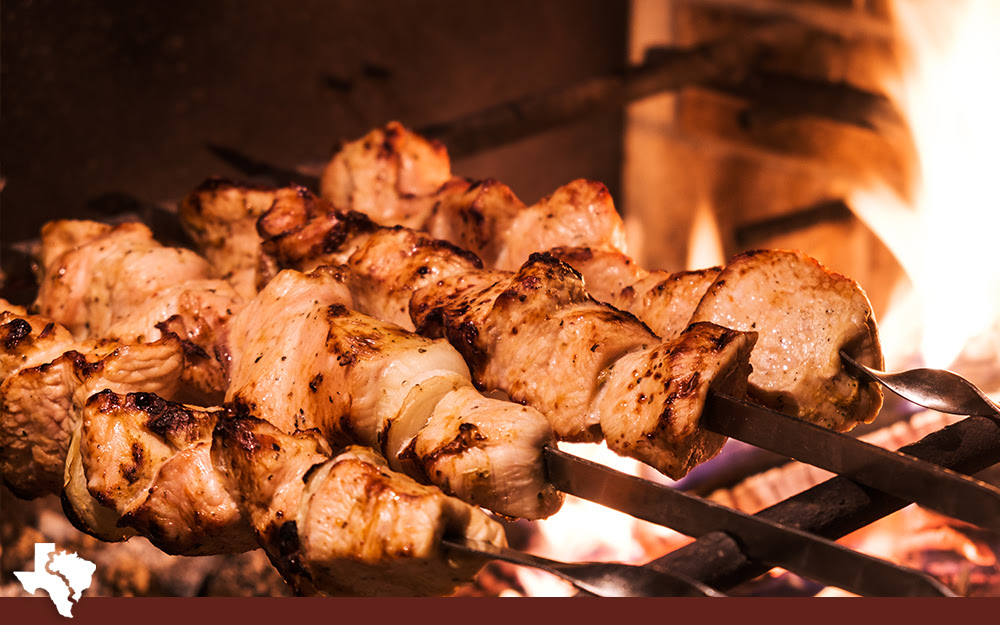
Churrascaria is slightly harder, but not by much. “chur-as-kah-RI-ah” is a good approximation. Again, you have the potential hard ch sound at the start, but the emphasis moves to the “ri” part of the end of the word. You also often hear the “as” part as “esh” with native speakers; “chur-esh-kah-RI-ah” in other words, but the difference is minimal.
Picanha, the Brazilian Cut of Beef
Perhaps the one menu item you’re nearly guaranteed to give a try when you stop by our churrascaria is picanha, a unique cut of meat you don’t normally find in American steakhouses or butcher shops.
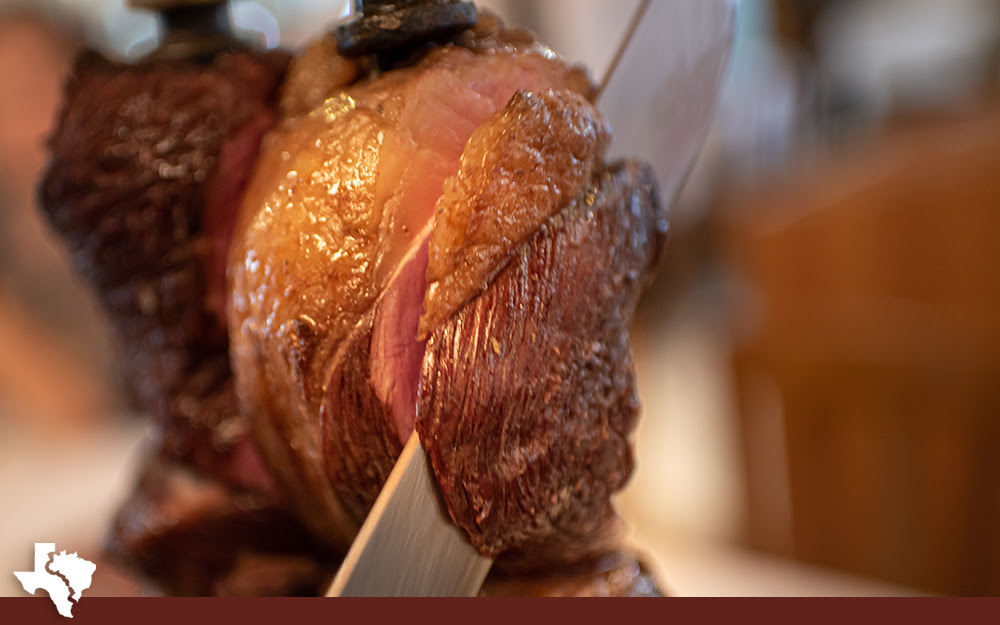
We’ve already covered the tricky part up above: the nh. Remember what it is? Picanha is actually almost like that popular Nintendo game’s mascot, Pikachu, if it was a cat. Think: “pi-KAH-nyah.” Emphasis in the middle, Y sound at the end, and you’re there.
Linguiça, Brazilian Sausage
This is one we have on our menu, just under the common name of Brazilian sausage, so you certainly don’t have to learn how it’s pronounced to eat at our restaurant. We’ve included it as an example, though, because it’s another good example of the ç letter.

Linguiça is pronounced “leen-gwee-sah” with an even emphasis across the syllables. Really, though, just ask for the sausage.
Moqueca de Peixe, a Fish Stew
A seasonal menu item, this fish stew is iconic for certain regions of Brazil, and it’s crazy delicious. But how do you ask for it?
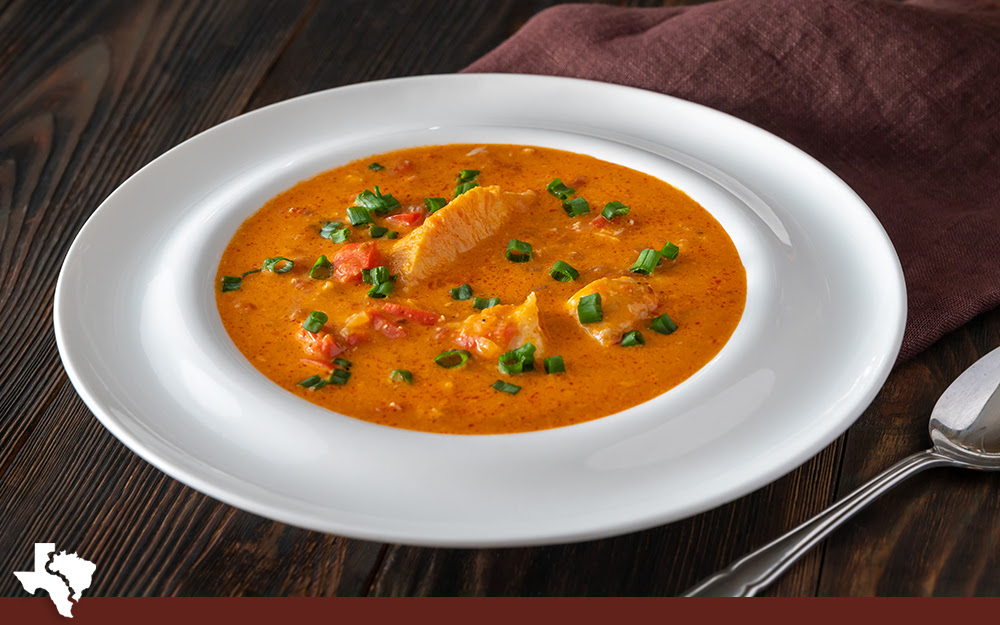
Moqueca is “moh-kay-kuh” with no real emphasis, and it isn’t that difficult if you know the “que” is “kay” in many languages. Leave out the American W sound from it, and you’re good. The “de,” of course, is just “day” as it is everywhere. Peixe is a bit more complex because we run into that tricky X again. In this case, it’s a fairly simple “sh” sound most of the time, so “PAY-shay” is good enough.
So, “mo-kay-kuh de PAY-shay” will get you a tasty seafood stew for a limited time!
Pão de Queijo, the Brazilian Cheese Bread
This is another one that, on our menu, is listed in English as “Brazilian cheese bread.” It’s also a slightly complex pronunciation as well, though it’s not too bad.
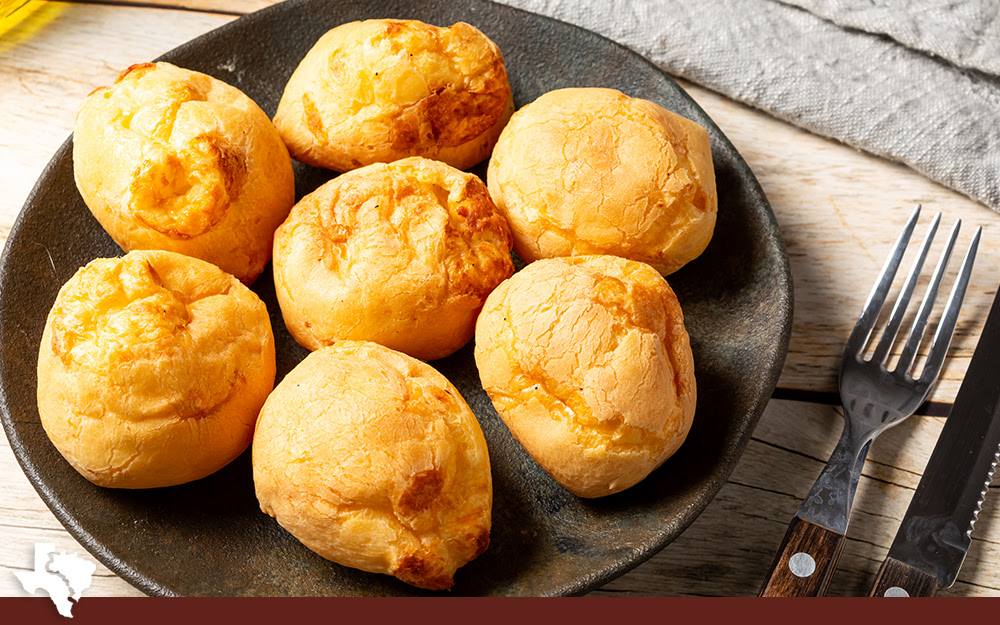
Pão, despite the tilde over a, is really just “pao” as far as American ears can hear it. Technically, the “ão” is a slightly more complex sound, but it’s one of those sounds that are very difficult to hear or describe for American ears, so we’ll just gloss over it.
De, of course, is De, just as in the fish stew above.
Queijo is where things get a little trickier. The “quei” is “kay” and the “jo” is “ju” here. So, you get “KAY-ju” here.
Put it all together, and you have “pow de KAY-ju” for a tasty, chewy, cheesy bread.
Will Your Servers Appreciate the Effort?
If you were to go to a Brazilian tourist hotspot where English-speaking tourists are common and bilingual staff are everywhere, putting in the effort to learn the basics of Brazilian Portuguese so you can sound a little less of a tourist is a great idea.
Texas de Brazil, though, isn’t in one of those tourist hotspots, generally speaking. We do have locations all around the world, but not in Brazil because you can just get authentic local churrasco if you’re in Brazil. We’re bringing churrasco to a global stage instead.

So, the answer is, maybe. Here’s the thing: while some of our servers may be Brazilian in origin, not all of them speak Portuguese. They’ll certainly familiarize themselves with our menu, but most of our menu is English or Americanized because we certainly don’t expect our customers to learn a new language just to enjoy our delicious food.
So, while it can be a fun thing to do, and exposure to other languages is always a good thing, do it for yourself, not because you want to impress us. You never know who you’ll be talking to and if they have even as much experience with Portuguese as you do.