 Your Privacy Choices
 California Privacy Notice


How Does Picanha Compare to Ribeye or Filet Mignon?
Different cuts of beef have different characteristics. That much is obvious. What’s less obvious is what those characteristics are, how they affect the flavor and texture of the meat, and how they respond to different methods of cooking.
The Brazilian favorite cut, picanha, is prized throughout Brazil and is growing in popularity in the United States. Meanwhile, traditional favorites like ribeye and filet mignon have an enduring presence on steakhouse menus everywhere.
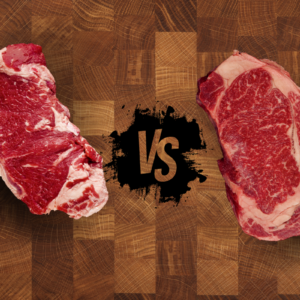
If you just want a really good steak, which cut is best for you? What if you want a steak to marinate, or slow-cook into shredded meat, or use as an ingredient in something else? Let’s discuss the unique profiles of each of these three popular cuts, and why you might pick one over another.
Table of Contents
What is Picanha?
Picanha is a cut of steak that may be unusual to many Americans, and as such, your first time encountering it might be when you visit a Brazilian steakhouse like Texas de Brazil.
Why? It’s a matter of tradition and cultural use of meat, according to butchers.
Butchers break apart the animals they sell, but it’s not like a cow is made up of individual pieces like puzzle pieces. A lot of these different areas of meat are interconnected, and with a knife, they can be divided in different ways.
Many cuts of meat are broken down along certain natural dividing lines. Sheaths of cartilage or tough bits of tendon can get in the way of an enjoyable dining experience, and rather than try to cut them out of the middle of a steak or roast, it’s easier to divide a larger piece of meat along one of those lines.
Sometimes, though, a piece is large enough to be broken down in different ways. The sirloin and rump area is one such piece. A whole sirloin is a large piece of meat and can be cut in a bunch of different ways.
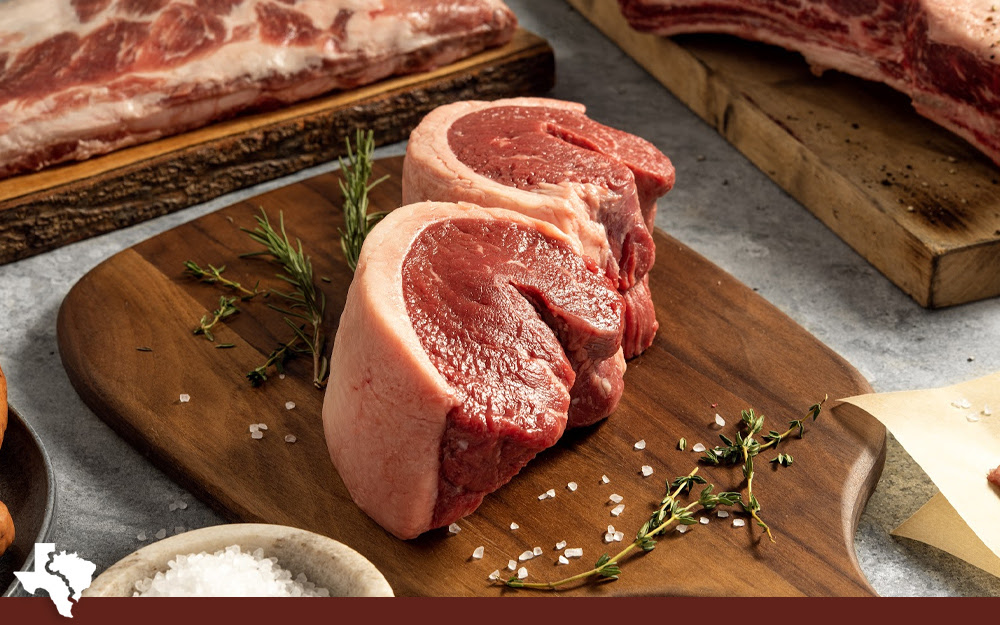
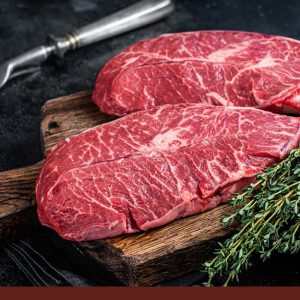
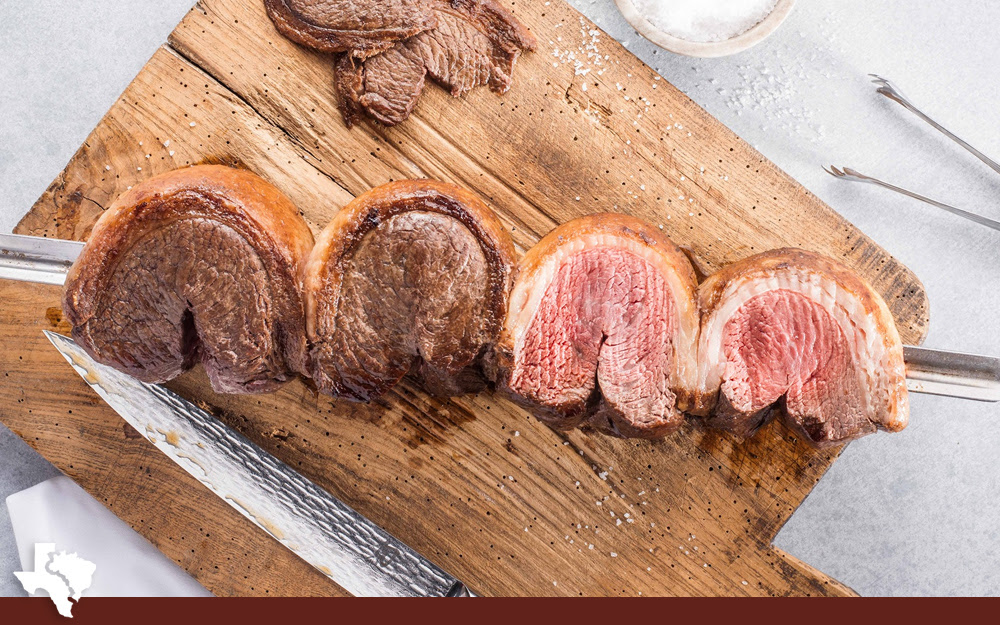
All of this brings us to picanha. Picanha is also known as the “sirloin cap”, as well as names like culotte steak or rump cover.
The main characteristic of picanha is the fat cap, a thick layer of fat that rests across one edge of the picanha. This fat layer is often used as a dividing line, as mentioned above, so when the sirloin and rump are broken down, steaks are cut from either side of the fat and the fat is discarded or used for another purpose.
With picanha, the fat is retained and left attached to the meat.
Picanha is growing in popularity, so you’re able to find it more and more, but it’s still a relatively rare cut at most markets across the United States. You will want to talk to your local butcher to ask if they have it or can source it for you, visit a specialty store that carries it (which can vary by area), or order some online from a source like our butcher shop.
What is Ribeye?
A ribeye is a significant part of the ribs of the cow, though it obviously doesn’t contain the actual ribs, which are set aside as their own cut. There are actually several varieties of ribeyes, even, depending on how much they’re cut down.
The largest and least trimmed is the tomahawk steak, named for its resemblance to a tomahawk tool, with one long rib acting as the handle and the meat as the head. These steaks are large and impressive, but have some issues, like large chunks of dense fat and, of course, the bone.
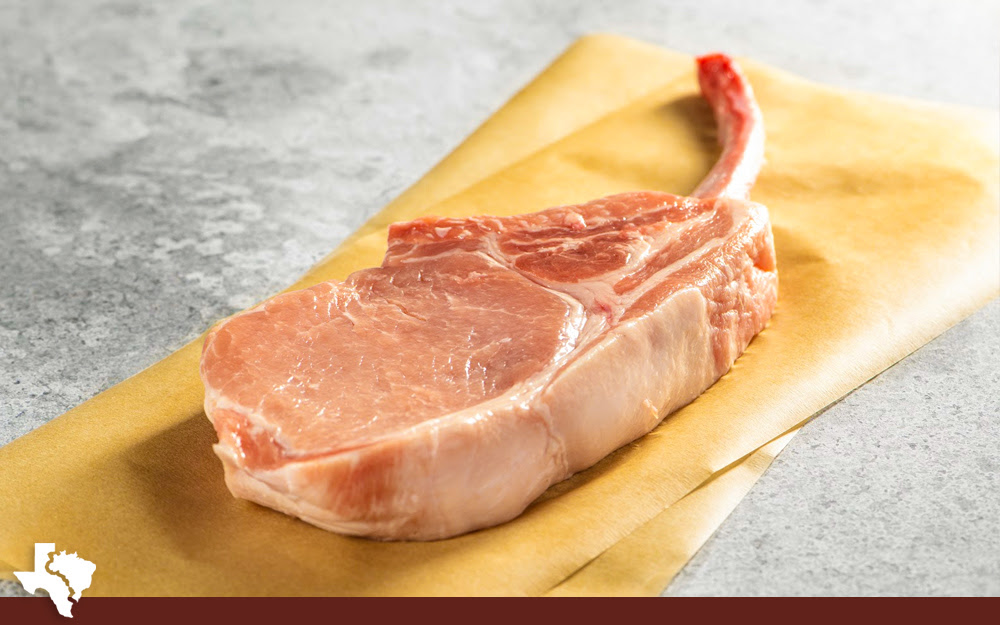
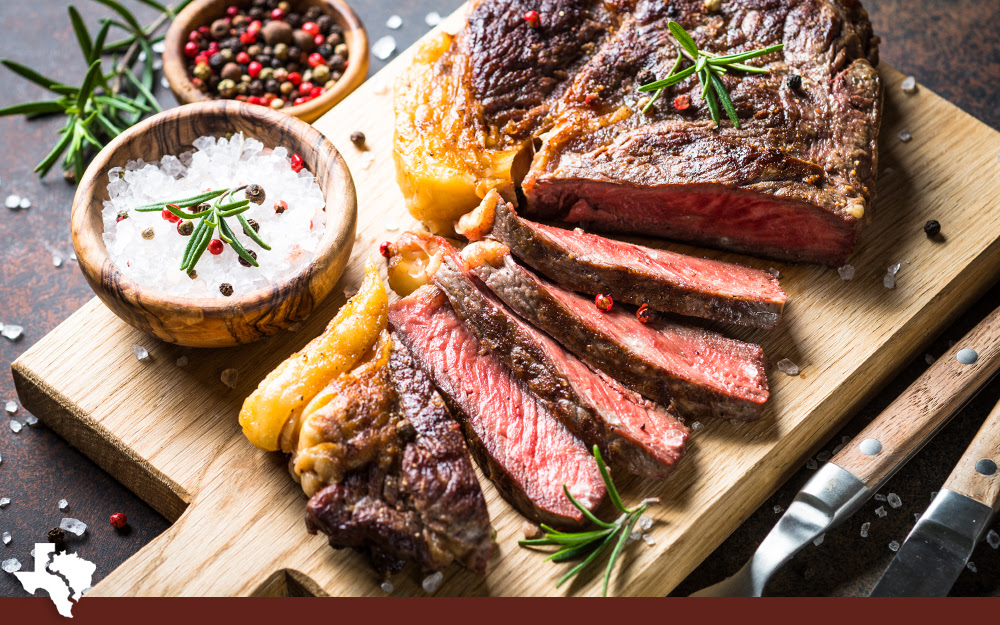
When the bone and some, but not all, of the fat is trimmed away, you’re left with a classic ribeye. This steak retains a line of fat running through it, and a cap of tender meat along the edge, which is lost if the fat were to be removed.
Removing that fat and the cap leaves you with a standard ribeye, the cheaper and smaller ribeye steaks you can find at most grocery stores. There’s also a “butcher’s cut” ribeye, which is much smaller but also much taller, almost as tall as it is wide.
In technical terms, the cap is the spinalis dorsi muscle, the core of the ribeye is the longissimus dorsi muscle (also just called the eye), and the areas along the tail are the ribeye tail, the rib itself, and the complexus muscle. All of these can be trimmed and broken down in different ways; it’s just that the ribeye is the easiest and most classic version.
What is Filet Mignon?
If you ask anyone what the best possible cut of steak is, there’s a decent chance they’ll tell you the filet mignon. Many people don’t even know why it’s such a prized cut of steak, just that cultural saturation in America has led to its reputation as the king of steaks.
To find the filet mignon, you start with the loin, which is a large primal cut of beef. Breaking down the loin, you are left with the subprimal cut called the tenderloin. The tenderloin runs along the spine, on either side, and is a relatively less-used muscle compared to many others, which leaves it much more tender than the more well-used muscle groups.
The overall tenderloin is a tapering cut, conical in shape. Near the narrow end is where it’s at its most tender, and small, thick cuts of this section are what earn the name tenderloin.
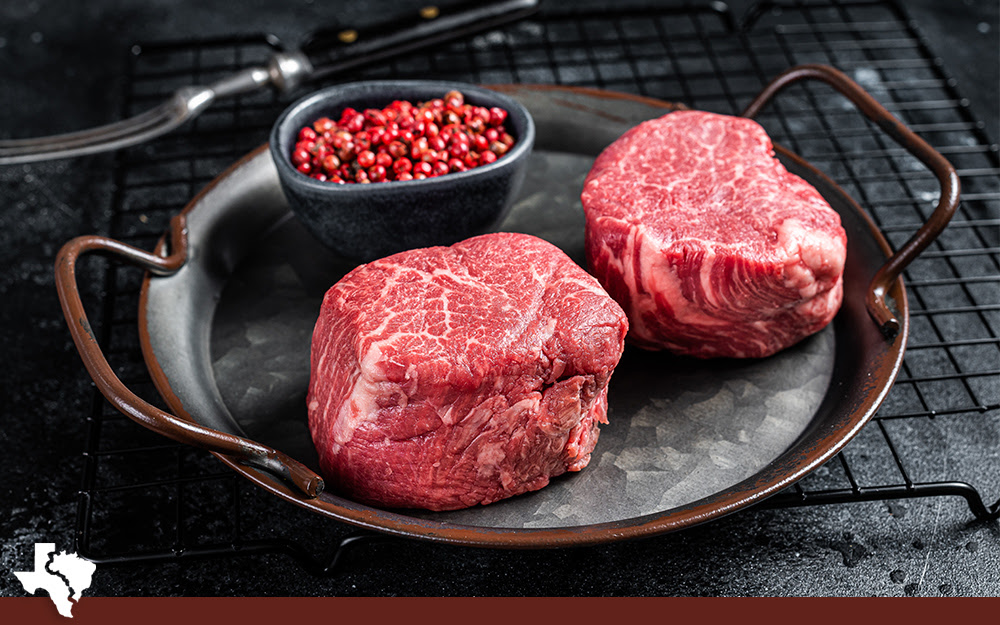
So why is tenderloin considered such a prized cut of meat? Mostly due to rarity. The tenderloin is a small part of a large animal, and the filet mignon is a small part of that small part. You can only get a few filet mignon steaks out of any individual cow, so the scarcity leaves it as an expensive piece of meat. Since price is often correlated with quality and desirability, of course it gained the reputation.
Fun fact: on a T-bone or porterhouse steak, you have two pieces of meat divided by a bone. On the larger side, the bulk of the steak is the strip steak. The smaller side, which is usually much more tender but only gives you a few bites to savor, is the filet mignon.
Comparing the Steaks: Picanha, Ribeye, and Filet Mignon
Now that you know what the steaks are, let’s compare them on the various elements of a steak that matter.
Fat and Marbling
One of the main points of comparison between these three cuts is the presence and position of fat. If you’re familiar with steaks, you know that fat is where the flavor is. Fat marbled throughout a piece of meat gives it a characteristic taste and tenderness, while a much leaner cut (something like the round or flank) is going to be tougher, drier, and less flavorful on its own.
Picanha is a relatively lean but somewhat marbled muscle, with a rich, thick fat cap along one side. This unique balance allows the fat to render out and flavor the rest of the meat while it’s cooking, without being a larger mass in the middle of your steak you chew on unpleasantly. It’s far from the leanest steak out there, but it’s leaner than something like a ribeye.
Ribeye has both large lumps of fat and a lot of marbling throughout the meat. Some people consider it comparable to picanha, though the insulating cap of meat in the ribeye protects the fat layer and prevents it from rendering in its full glory. Meanwhile, the robust marbling infuses the steak with a ton of flavor and tenderness; it’s one of the least lean cuts possible.
Filet mignon, being a small steak without a fat cap, is actually one of the least flavorful steaks on its own. More on that later. That might be shocking, but the fact that the filet mignon is not a well-used muscle means it is still very tender despite the lack of marbling. Higher-grade filet mignons have more marbling, however, and can be absolutely fall-apart tender. The trick is, it takes a lot more care in raising the cattle to get a well-marbled filet, which is why some of the most prized versions are fat-centric cattle like wagyu and kobe.
Size of the Cut
Another significant difference between these three cuts is the size.
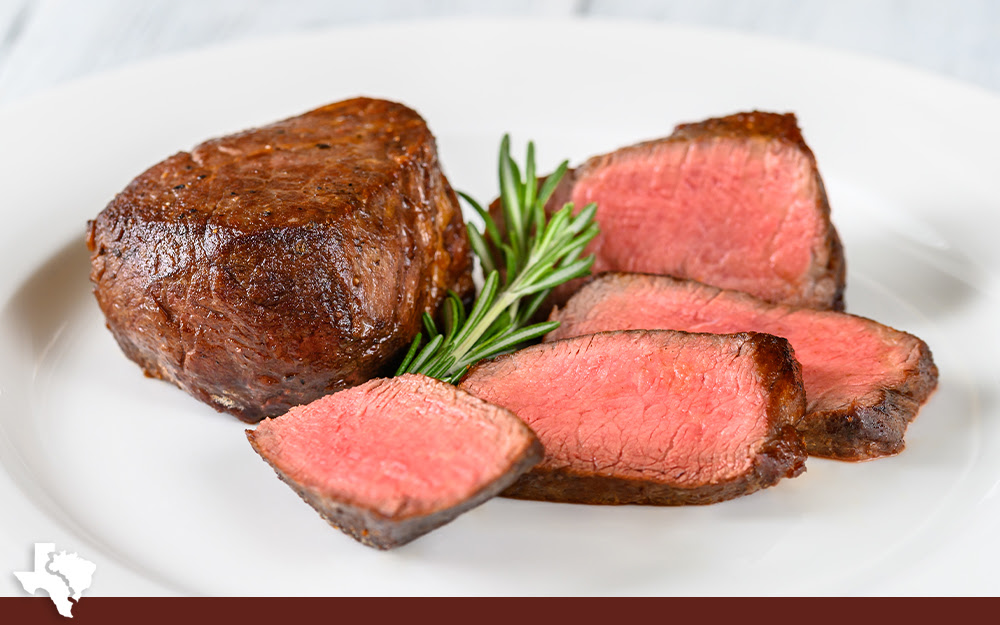
Filet mignon, as discussed, is a very small cut of steak. The largest filet is still fairly small, and the smallest are called medallions because they’re practically bite-sized.
Picanha and ribeye steaks are actually fairly comparable in size; their main difference is in the distribution of the fat. Picanha’s fat is mostly in a cap along one edge, with the muscle fibers all stretching in a uniform direction away from it. Ribeye is more of a curled mixture of fat lines, marbling, and meat.
This also affects the price. Ribeye is more available and, thus, more affordable. Picanha is also relatively affordable, though it might be pricier in the States just because it’s uncommon. Filet, being small and in short supply, is much pricier.
Richness of Flavor
The flavor of a piece of steak is, ironically, something that a lot of Americans haven’t actually enjoyed as much as they think they have. That’s because most steakhouse steaks are cooked with a variety of seasonings and a lot of butter. The steak is richly flavored with rendered fat, added butter, herbs like rosemary, potentially garlic and onion, salt and pepper, and more. And that’s not even getting into barbecue sauces, spice rubs, or smoking.
If you were to simply cook all three steaks with nothing more than salt and heat, the way traditional Brazilian churrasco does it, how would they compare?
Filet mignon is extremely tender but surprisingly low in the flavor department. The small size of the steak and the difficulty in getting marbling to reach it without overworking it means it doesn’t have as much flavoring to carry it.
To be clear, filet mignon is not flavorless. It’s delicate, almost buttery. The difficulty is, steaks are so often presented as a strong flavor themselves, so a filet prepared with nothing more than salt is going to be, well, just kind of salty. That’s why it’s often wrapped in bacon, for example.
Ribeye is effectively at the opposite end of the spectrum; you get a lot of the flavor of the fat, and not a lot of much else. It’s a very rich and bold flavor, and to an extent, carries with it some of the flavor of how the cattle were raised. It’s why grass-fed steaks are generally richer than grain-fed.
Picanha is on a different axis. The fat being off to the side gives it a bit of richness, but the star of the show is the flavor of the meat itself. Many people find it almost unique among steaks, the way it stands out with that beefy flavor.
Which Steak Should You Get?
This might seem like a tricky question, but we have the best answer for you: all of them!
When you go to an American steakhouse, it can be agonizing to pick which cut you want, and it might come down more to size and price than flavor.
Instead, come visit your nearest Texas de Brazil!
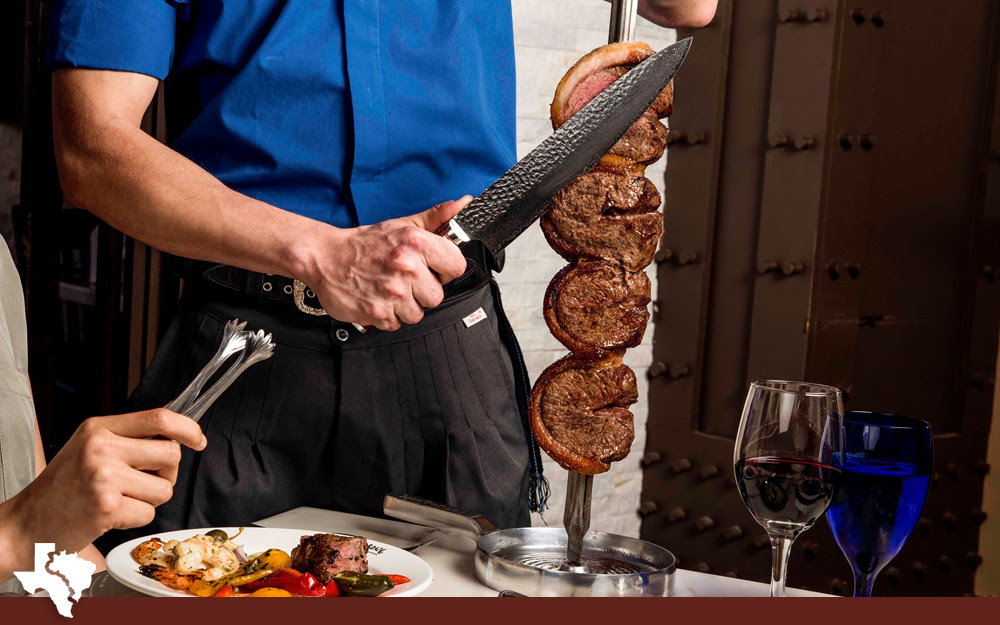
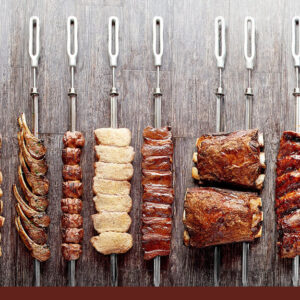
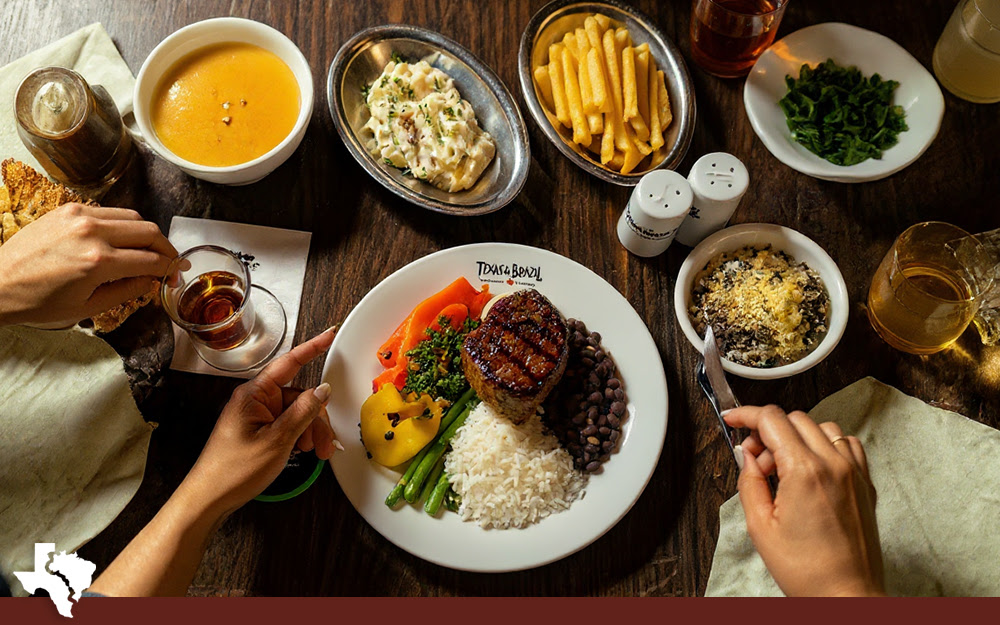
The Brazilian style of rodizio has our gauchos bringing skewers of over a dozen different kinds of meat, from picanha to filet, to your table. You can try each and every one, a few bites at a time, and ask for more of whichever ones you like the most. Meanwhile, you can also enjoy all of the excellent dishes and flavors of Brazil we’ve brought to the States, like feijoada, pao de queijo, and farofa.
We love introducing new people to both the Brazilian traditions surrounding churrasco and to our favorite cut, the picanha. Plenty of people give it a try and end up converts, and we hope you’ll join them, so swing on in and give it a taste!
Don’t forget to sign up for our free e-club for an exclusive introductory deal, along with more deals along the way. And, if you find you love picanha, check out our butcher shop to buy some to try at home!