 Your Privacy Choices
 California Privacy Notice


Red Card vs Green Card: Brazilian BBQ Basics
If you’ve never been to a Brazilian barbecue before, you might be in for a small bit of culture shock. Don’t worry; it’s nothing major, it’s really easy to learn and enjoy. Just in case, though, we’ve put together this guide to make sure you know what’s what, and of course, our friendly gauchos will be there to help you every step of the way.
Table of Contents
Arriving at the Steakhouse
When you first arrive at your nearest Texas de Brazil location, you’ll be asked a couple of questions. The first is if you’ve ever been to a Brazilian steakhouse before. If not, the front-of-house staff will give you the rundown on what makes our experience unique: Rodizio.
You’ll also be asked if you’re going to be enjoying our meats or not. We welcome our vegetarian and vegan guests to enjoy meals alongside their more carnivorous friends and family and even offer a lower-priced meal package that lets you enjoy anything you like from our hot bar and salad area.

Our steakhouse, like most Brazilian churrascarias, is a continuous dining experience. In American parlance, it’s an “all you can eat” style, though it’s not quite a buffet.
When you’re shown to your table, you’ll be handed a card and told what it means. Don’t worry; it’s easy. To know where it fits in, let’s talk about Rodizio-style dining.
What is Rodizio?
Rodizio is the Brazilian Portuguese word meaning “rotation.”
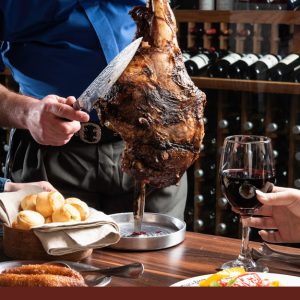
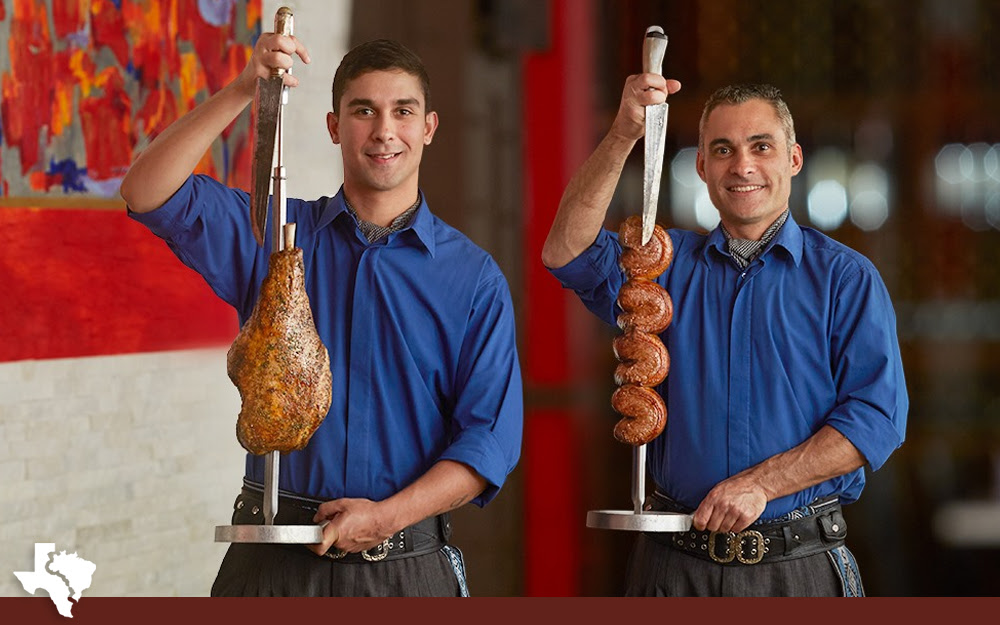
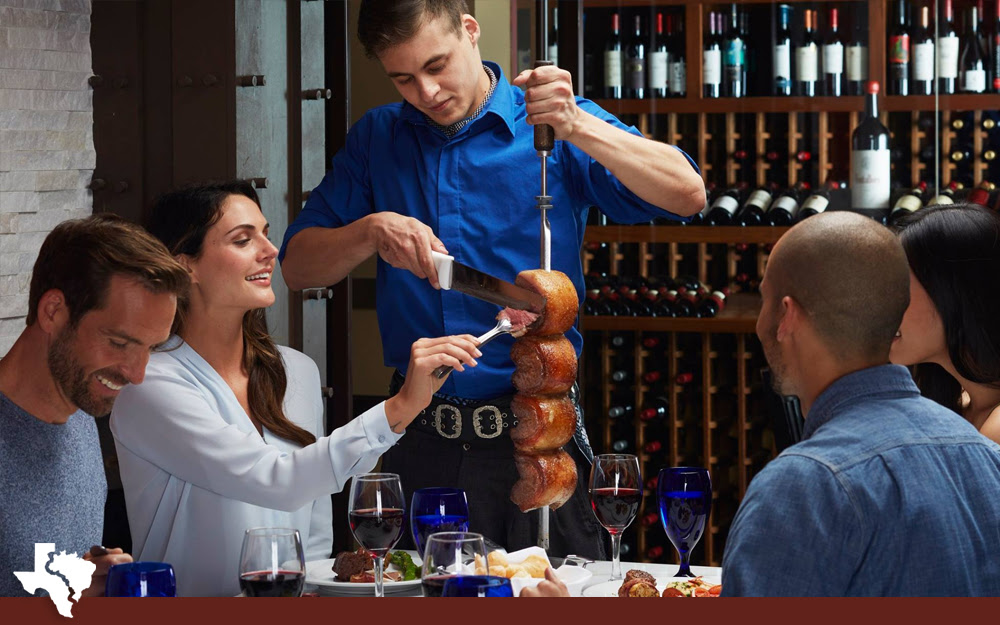
This is because, when you’re dining on the meat at a Brazilian steakhouse, it comes to you in a rotation. Our gauchos are in charge of individual skewers of delectable meats cooked over the fire on our grills. When a skewer is ready, the gaucho will bring it out to the dining room and move from table to table.
This is where those cards come in, but more on that in a moment.

As the gaucho circulates through the dining room, they’ll offer the meat on their skewer to interested diners. Those who want it can take some, and those who don’t will pass on it.
This holds true no matter what the meat or cut happens to be. Maybe it’s our traditional Brazilian picanha. Maybe it’s some parmesan-crusted chicken drumettes. Maybe it’s a bit of bacon-wrapped sirloin or even some ribs. Each skewer is loaded with one type of meat, served until it’s empty or no one wants it, and then returned to the fire if necessary for the next round.
Who came up with this idea?
Having cowboys bring out skewers that rotate through the tables is a pretty strange dining concept, especially for people who have never had that kind of collaborative dining experience before. The traditional American restaurant experience (and, truthfully, the Brazilian experience as well) is much more isolated. You read a menu, you make your order, you’re given your food, and you enjoy your meal.
Well, that’s how Brazilian barbecues used to work, too. There are a few different competing stories about how the rodizio style came to be, but the most commonly acknowledged is that it came from a simple mistake.
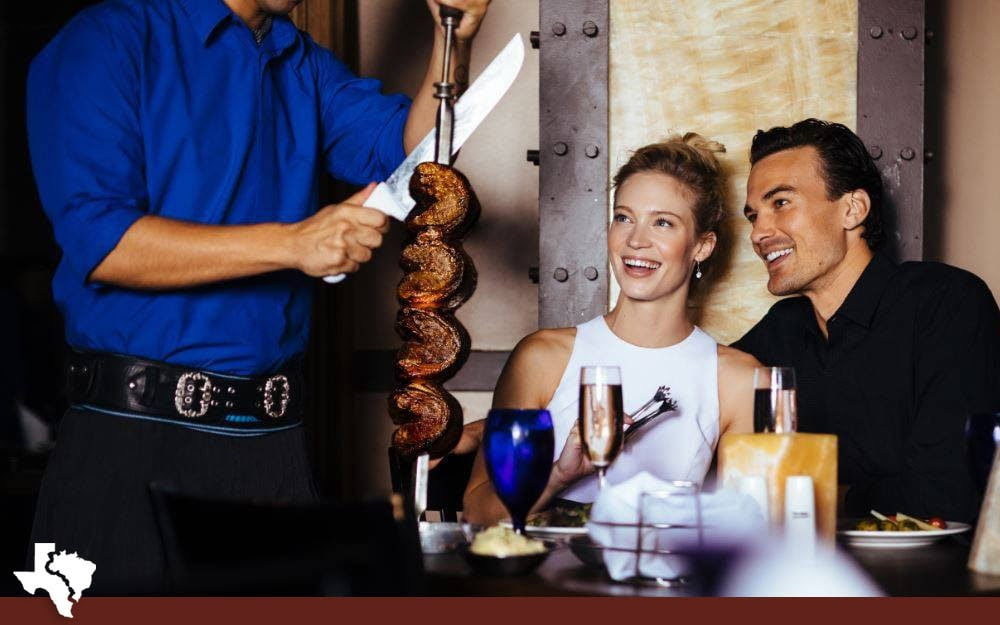
As the story goes, a server at a churrascaria back in the 1930s or so was filling an order; one table had ordered a particular kind of meat. The gaucho, unfortunately, made a mistake and brought the skewer to the wrong table. Rather than taunt them with the wrong meat and bring it over to the people who ordered it, they let the people at the accidental table take a slice of the meat to try.
Everyone involved thought this was a clever idea, even the people who ordered it (and who got their full share, of course), and it took off.
For a long time, the tradition was limited to just Brazil’s churrascarias, and not even all of them. Eventually, it started to pick up steam elsewhere. The earliest example of it coming to America was the restaurant chain naming itself after the style, Rodizio, which started up in 1995. Our iteration came soon after, with the first Texas de Brazil opening up in 1998.
Why cowboys?
So why are our servers all gauchos, also known as Brazilian cowboys?
This one is an answer that goes even further back and has nothing to do with rodizio. Instead, it’s all about the history of the churrasco method of cooking: the barbecue itself.
Many years ago, when herds of cattle roamed the prairies of the interior of Brazil, cowherds needed to drive them from place to place to care for them, bring them to market, and otherwise be part of the ecosystem and economy of cattle ranching.
Well, when you’re miles away from the nearest town, and your most readily available source of meat is the cattle you’re driving, it’s easy to put 1+1 together.
To cook that meat was a whole experience, though. On the open plains, a fire can be devastating and dangerous. Gauchos of the time would dig pits to keep the fire away from nearby flammable materials and to shelter it from the wind. To cook the meat, a simple frame was built, and skewers were held over the flame using that frame.
A high heat, delectable cuts of fresh meat, and the open plains; it’s practically a dream come true for many, these days.
Since the barbecue method started as the cattle driver’s cooking method of choice, we’ve simply carried that aesthetic forward. Have our gauchos ever driven cattle across the plains of Brazil? Probably not, though we can’t rule it out. Are they dressed to look the part and bring that bit of Brazilian history to your table? Of course!
So, About Those Cards
We digressed a little, but isn’t history fascinating? So, about those cards. Or, rather, that card; most churrascarias use a single card that is double-sided for ease of reading.
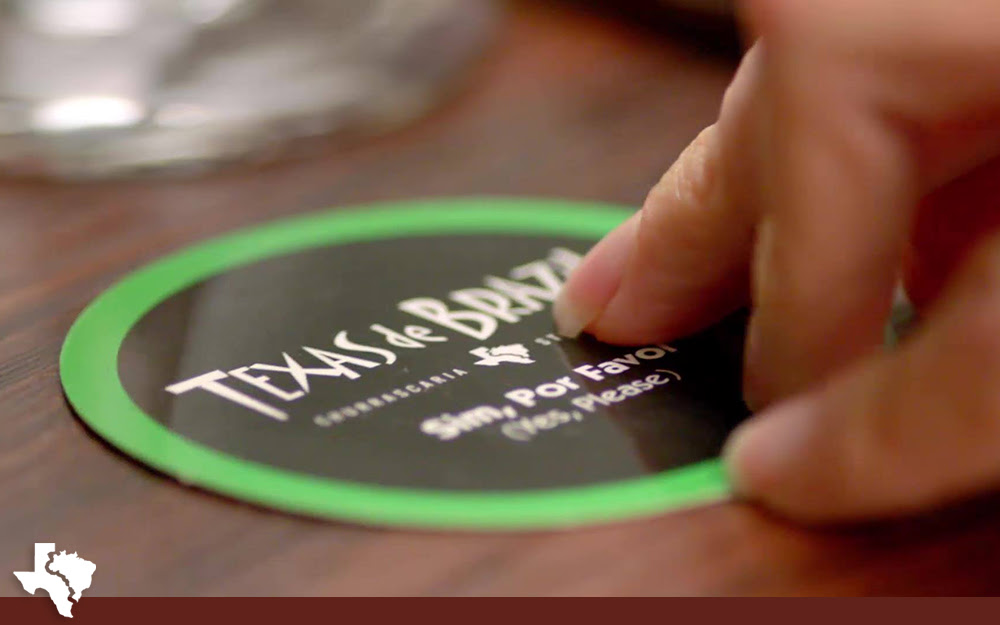
The card is pretty simple. One side is green, and the other side is red.
If your card is red, the gauchos will pass you by. Red simply means stop; you have enough on your plate, you’re full from the meal, you want to enjoy some of the feijoada, farofa, or other Brazilian classics from the hot bar or the salad area first, or even just that you’re waiting for friends to arrive before you start eating in earnest.
When you’re ready for meat, you flip your card over to the green side. Gauchos taking their skewers through the dining room will see your card is green and will come over to offer you a cut of whatever they have on their skewer.
Depending on the meat they have on offer, you might be given a whole cut (like the drumettes, the ribs, or the picanha), or you might be given some slices instead. That’s what the other accouterment on your plate is for: the tongs.
The tongs are there to avoid food contamination. Your gaucho will place their skewer at the table and, using their special gaucho knives, will cut a slice or two for you. They’re trained to cut almost, but not all the way, through their cut, leaving it hanging until you grab it with your tongs. Once you have a hold of it, they finish cutting, and you transfer it to your plate.
Only use your tongs for grabbing fresh cuts of meat, and never use your fork and knife or, heaven forbid, your hands! The goal is to avoid food contamination from table to table.
Why Go Through This Elaborate Ritual?
Well, it’s not that elaborate, and it’s less of a ritual and more of a tradition.
But really, there are some real benefits to our guests. For one thing, it lets you try all of the meats we have on offer! When you go to an American steakhouse, you make your order, you get your steak, and you have one cut of meat cooked one way. By the time you’re even halfway through it, it’ll be cold, it might not be cooked perfectly all the way through, and we all know the first few bites are always the best, right?
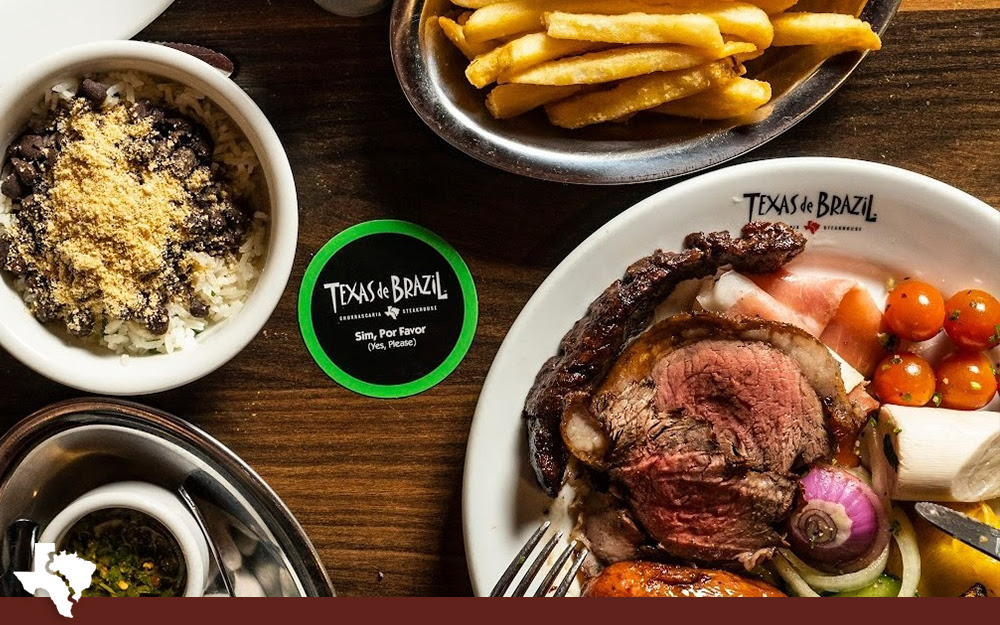
When you enjoy rodizio-style churrasco, you get to try a little bit of everything, and it’s always that first, delicious bite. And, of course, you’re free at any time to head over to the salad area or the hot bar or make an order for something off the specialty menus as well.
It’s unique, it’s social, it’s fun, and it gives you a more varied dining experience than you would have had otherwise.
Common Questions on How Brazilian BBQ Works
To round things out, let’s answer a few of the more common questions you might have.
Do I have to take a meat a gaucho offers because my card is green?
Not at all! Maybe you’re done with the beef, but you want more chicken or lamb. Maybe you don’t want the spicy picanha, but you’re yearning for more petit filet. Whatever the case may be, putting your card on green is an opportunity, not a responsibility. Gauchos will approach, tell you what they have, and ask if you want it. You’re free to decline, and they’ll move on to the next table.
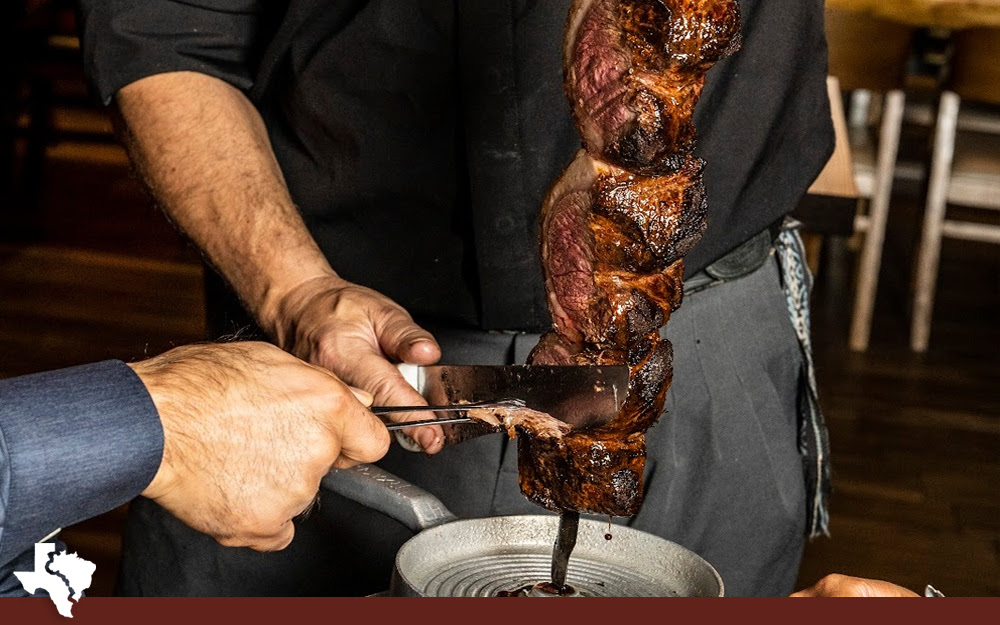
For that matter, if you forgot your card was on green and a gaucho stops by, but you decide you’re good, you can just flip it over. There’s no harm, no foul!
If I flip my card to red, does that mean I’m done?
Not at all! Red means gauchos will pass you by, but as long as the churrascaria is still open, they’ll still be coming around.
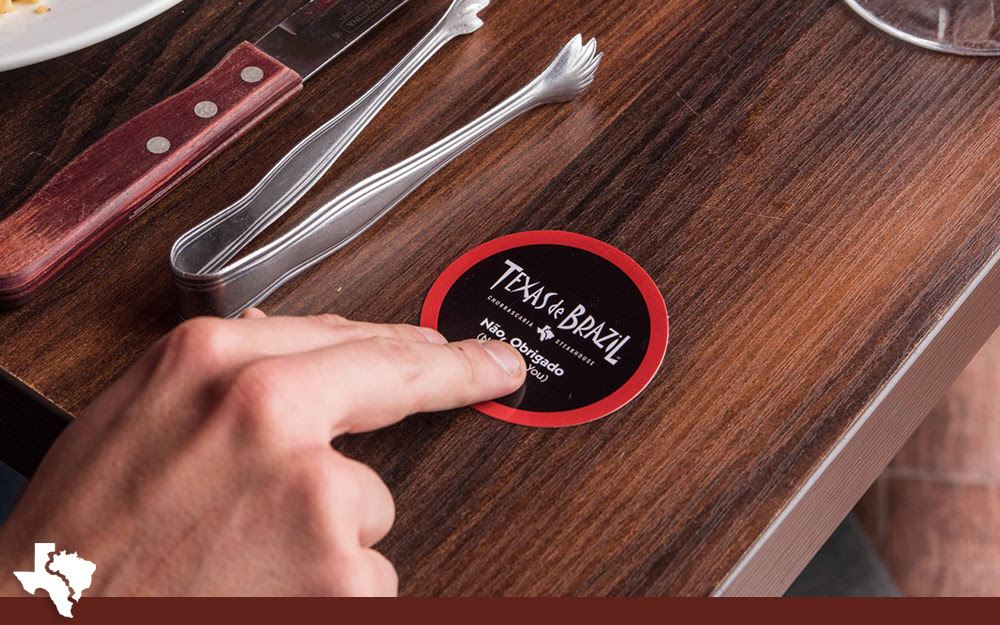
If you want to flip it back to green for another round, you’re free to do so right up until you’ve had enough. Since it’s a continuous dining experience, you can enjoy for as long as you want to, right up until it’s closing time and we sadly have to part ways.
What if I want something on the menu that the gauchos aren’t offering?
There are two reasons this might be the case.
The first is that what you’re looking for isn’t on a skewer, and you’ll have to head over to the salad area or the hot bar to get it or make a special order. For example, our desserts aren’t included in the standard meal package but need to be ordered when you want them, and they cost extra. The same goes for our cocktails and other drinks.
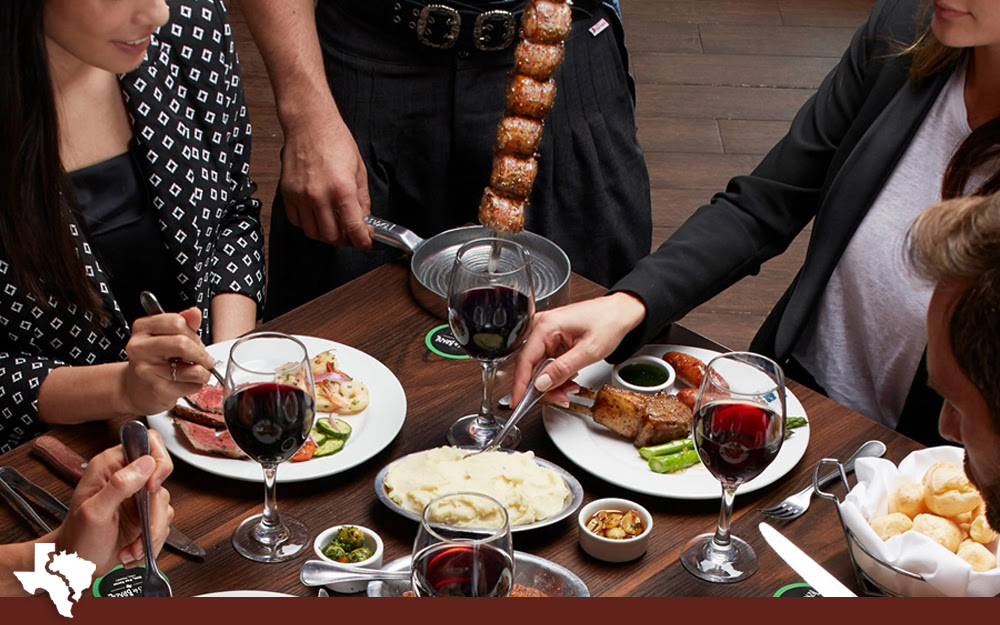
The second is if it’s something that isn’t currently available. Either we ran out for the day, or there wasn’t any quite ready to be served, or it was a seasonal item and was off rotation. In these cases, you can ask a gaucho if it’s available, and they might be able to add some to a skewer and bring it out when it’s ready, or it might not be. It’s fine to shoot your shot either way!
Can I try the meats if I didn’t get the meat menu?
Yes and no.
We can’t stop you if your friend wants to let you try a bite of something, sure. It’s good to have a sample, and next time you swing through, you can get the meat menu yourself.
But, if your friend keeps flagging down gauchos and filling your plate as well as their own, it’s just not going to work out between us. We’d have to ask you to stop or to pay for your own meal.
The exception is, of course, the kiddos. Children under 2 are complimentary with a full-priced meal, and children 3-5 are just $5 each. Children 6-12 are half-price, too! After 12, though, their appetites – and their pricing – are close enough to an adult.
Can I get a box to go?
For the meats, unfortunately, no.
But, if you order something that isn’t part of the continuous dining experience, like a dessert, you’re free to take home anything you didn’t finish.
How do I get extras, like drinks or desserts?
Just ask!
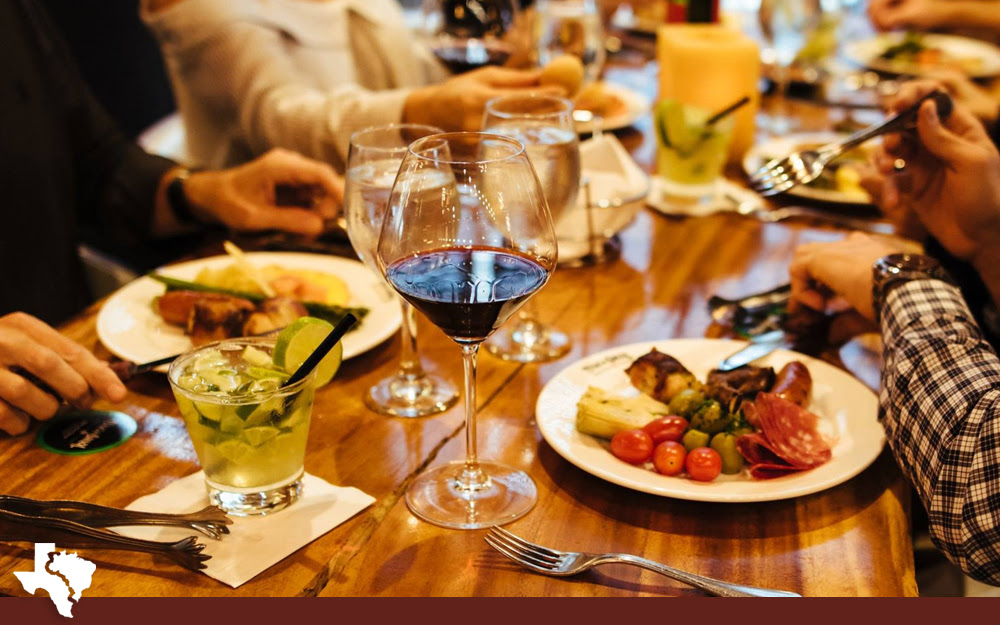
Your gauchos can put in whatever order you like, so anything on our drinks and desserts menus are up for grabs.