 Your Privacy Choices
 California Privacy Notice


Why Do Brazilian Restaurants Serve Pineapple First?
If you’ve ever visited a Brazilian steakhouse before, you might have noticed something a little odd. Often, we serve a bit of pineapple at the start and periodically throughout the meal.
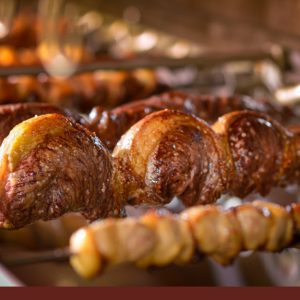
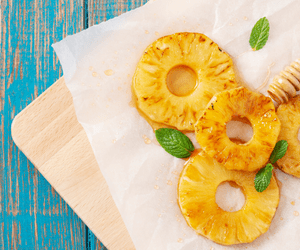
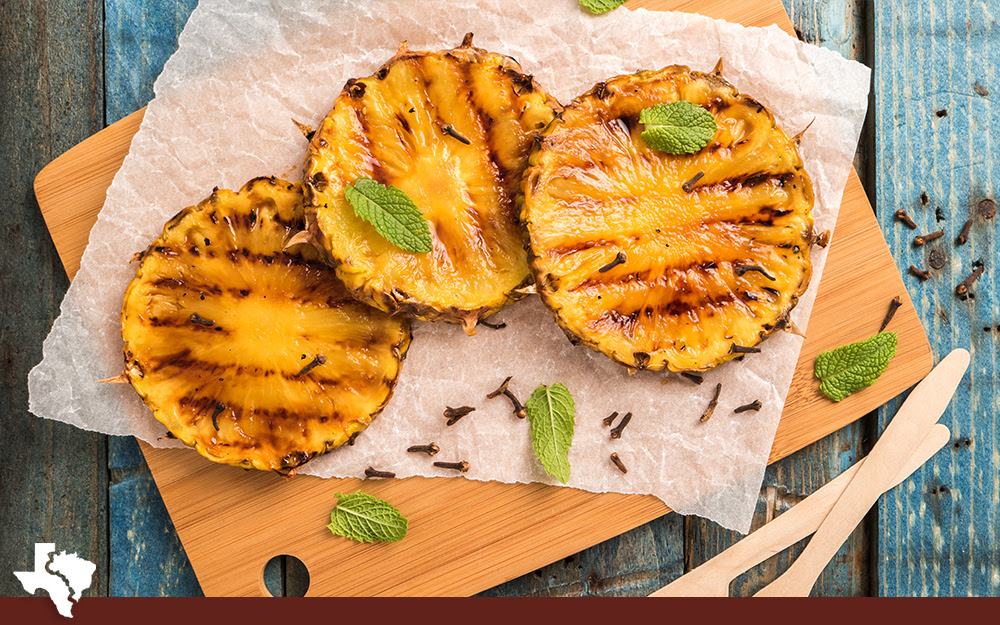
It might be cut into logs and grilled. It might be grilled whole and sliced just like our meats. It might be sliced into rings and grilled more traditionally. All of these cooking methods result in the same basic idea: a delectable, sweet and tart piece of fruit you can enjoy before getting started or as you sample our meats.
The question is, why pineapple, and why right off the bat? Pineapple isn’t traditionally an appetizer, after all, and when it’s grilled and coated with cinnamon and sugar, it’s a lot more like a dessert. Well, there are a few reasons for that, and it’s a pretty interesting discussion, so let’s get right into it.
Table of Contents
Why Pineapple?
Pineapple, if you didn’t already know, is a fruit native to South America. In fact, it has roots in the southern regions of Brazil and along the rivers in Paraguay. If those locations sound familiar to you, it’s because they’re pretty much the same locations where gauchos made their homes, and consequently, where the fine art of churrasco was invented.
Pineapples have been cultivated for thousands of years, and were introduced to Europeans by Christopher Columbus. While the Spaniard may have done a lot of things we aren’t so happy about these days, at least broadening the horizons of the pineapple wasn’t one of them. Portuguese colonists also brought pineapples back, and they’ve been a staple tropical fruit ever since.
Interestingly, because of their rarity and interesting design, for many years, the pineapple was more of a display piece and a status symbol than a culinary delight in Europe for a surprisingly long time. They would be held on display, and frenzied attempts to grow them in climates unsuited to them bred fierce competition amongst the gentry.
Isn’t history wild?
As an immensely popular tropical fruit, pineapple is cultivated all around the world today, and Americans are certainly no strangers to the flavor. But why was pineapple chosen to be part of a churrasco meal?
Why Pineapple for Churrasco?
So, why is pineapple served before, during, and after your churrasco meal? There are actually four main reasons here.
It’s a Culinary Tradition
The first reason is simply that it’s a culinary tradition and a pairing you find all over South America. Pineapple has been much more of a staple fruit in South America than it was around the world, so the pairing of a savory meat like beef and a sweet, punchy fruit like pineapple was exceedingly common for us.
Whether it was pineapple juice used to tenderize meat or to accompany it in a beverage, slices of pineapple eaten fresh and ripe, or pineapple grilled over the fire to caramelize the sugars within, it was all a great companion to the main course.
Sometimes, these things don’t have to have a justification beyond tradition. People in South America, for many centuries, would enjoy pineapple alongside their meat. As culture advanced and restaurants became more common, the tradition carried forward, and pineapple would be offered alongside meals. When churrasco gained traction and the rodizio style of serving took over, pineapple was there to be served alongside the meats.
It’s a Great Flavor Combination
The “Hawaiian” style of food, as far as Americans are concerned, combines pineapple with savory items. Pineapple on pizza is a big one. The salty, peppery, cheesy, greasy bomb of a slice of pizza is enhanced by the sweetness and tartness of a bit of pineapple here and there.
Adding a bit of sweetness helps cut through salty meals, and adding a bit of acid helps cut through fatty meals. It doesn’t have to be pineapple, certainly. Other sweet ingredients can go on pizzas or on other meals. You often see pineapple and cherries studding the outside of a ham being roasted for the holidays, or sweet potatoes on the side of roasts, or mint jelly on the side of lamb, or honey and maple as flavors alongside other meats. Even American barbecue often uses sweet-leaning barbecue sauces!
A good ripe bit of pineapple, grilled with cinnamon and sugar, is an incredible flavor combination to complement the rich, fatty, salted meats you get on a churrasco menu.
It’s a Palate Cleanser
Another main reason pineapple is served at a Brazilian steakhouse, both before and during the meal, is as a palate cleanser. Different food cultures have different food items they use as palate cleaners, and pineapple happens to be ours.
You’ve certainly had the experience of a palate cleaner before, even if you weren’t sure of it or knew why it was there. Some fancy restaurants serve tiny cups of sorbet in between courses. Others have bread available to break up the other flavors and food items. Asian restaurants often serve a pile of pickled ginger alongside their meals, as a way to strip the tongue of the previous bites and prep it for the next ones. Some other cultures use apples or even herbs like parsley and mint.
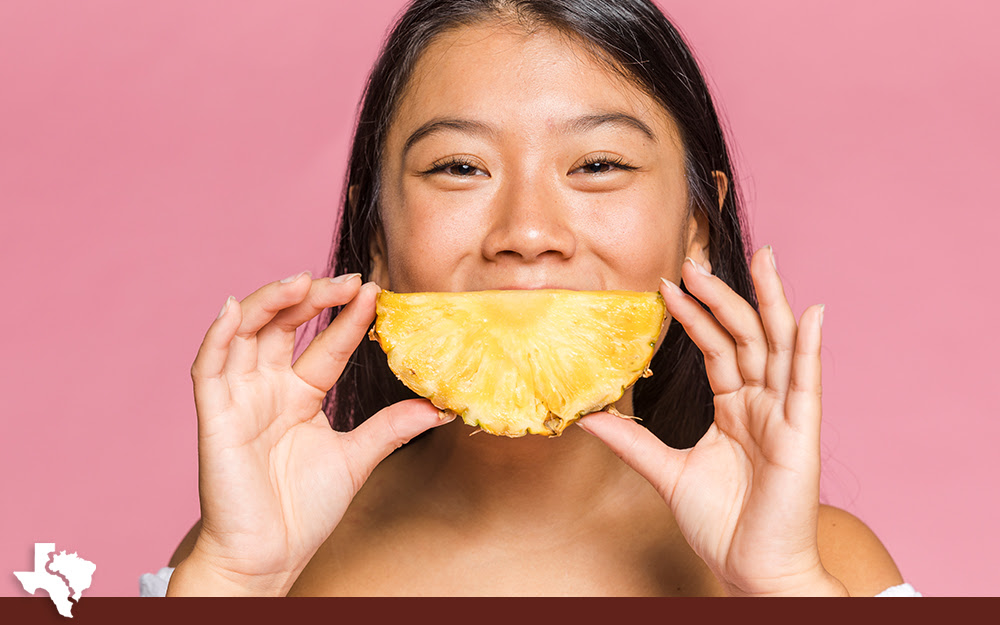
There’s a concept in food psychology called satiation, and specifically sensory satiation. When you first bite into something, that initial bite is very delicious. The more of it you eat, though, the less delicious each bite becomes, until you might not even want to finish it. It has to do with the novelty of the food item.
Palate cleaners help break up and “reset” the palate for subsequent bites of the same food. You’ll find that each bite is more delicious when you divide them with other food items.
Incidentally, this is also a huge benefit of the rodizio-style serving method you find at restaurants like Texas de Brazil. Instead of having one piece of steak with a more or less uniform taste and texture throughout, you get to experience that “first bite” of a dozen different meats in rotation, complete with a palate cleanser to help make that first bite even better.
There’s food science behind it!
It’s a Digestive Aid
The fourth of the main reasons, and actually one of the subtly most important with pineapple, is that it’s a digestive aid.
At the outset, you might recognize that something acidic is probably going to help break up the food you eat, spurring on digestion and helping you enjoy your food a little more thoroughly. But with pineapple, it goes beyond just being an acidic food.
Pineapple is unique among foods in that it contains an enzyme called bromelain. Bromelain is a very interesting enzyme that can actually help break down proteins. It’s why, if you eat nothing but a whole pineapple, you might find that parts of your lips, tongue, and the inside of your mouth have a slightly “burned” feeling to them. It’s because that enzyme is actually very slowly breaking down some of the proteins in your tissues.
There’s a reason it’s often called “the fruit that eats you back”!
Obviously, this isn’t going to cause serious problems unless you’re either allergic to pineapple or you’re basically bathing in the stuff. Billions of people enjoy pineapples with no ill effects, after all.
But when you eat pineapple, you’re consuming bromelain. When you’re also eating meat, which is made of protein, the bromelain gets to work helping to further break it down, more than your stomach acid alone can do. It’s basically kicking your digestive process up a notch.
The main benefit of this is that you don’t feel quite as full quite as quickly, and can enjoy your meat more thoroughly.
What’s interesting is that bromelain is most prominent in under-ripe pineapple, and grilling it denatures some of it. So all of these effects are minimized in Brazil, where we grill very ripe pineapples, but are more prominent here in America, where pineapples often have to be picked and imported when under-ripe. In a way, it’s a uniquely American benefit!
Bringing the Grilled Pineapple Home
Due to the continuous dining experience at Texas de Brazil, we don’t let people bring home “doggy bags” of excess food, unless it’s something ordered off a special menu, like the dessert menu.
But that doesn’t mean you can’t enjoy your own Brazilian grilled pineapple at home! In fact, it’s actually quite easy to make, and unlike a full churrasco experience, you don’t need an extra-hot grill or any special tools to make it.
While grilling the pineapple will get you the best results, you can also get delicious grilled pineapple through baking, and even cooking it in a pan, though that one will end up pretty different than what we have on offer.
First, pick the right pineapple. We will always recommend fresh pineapple when you can, since you can get larger pieces to grill more easily. The riper the pineapple, the better! You want something sweet and juicy for the maximum flavor.
If you can’t find fresh pineapple, you can use canned pineapple. It won’t be as good, but it’s better than nothing. Just make sure you aim for rings instead of chunks so it’s easier to work with, and you definitely need to get pineapple in juice, not pineapple in syrup. If it’s coated in sugary syrup, you’re just going to burn the syrup when you cook it and end up with a mess.
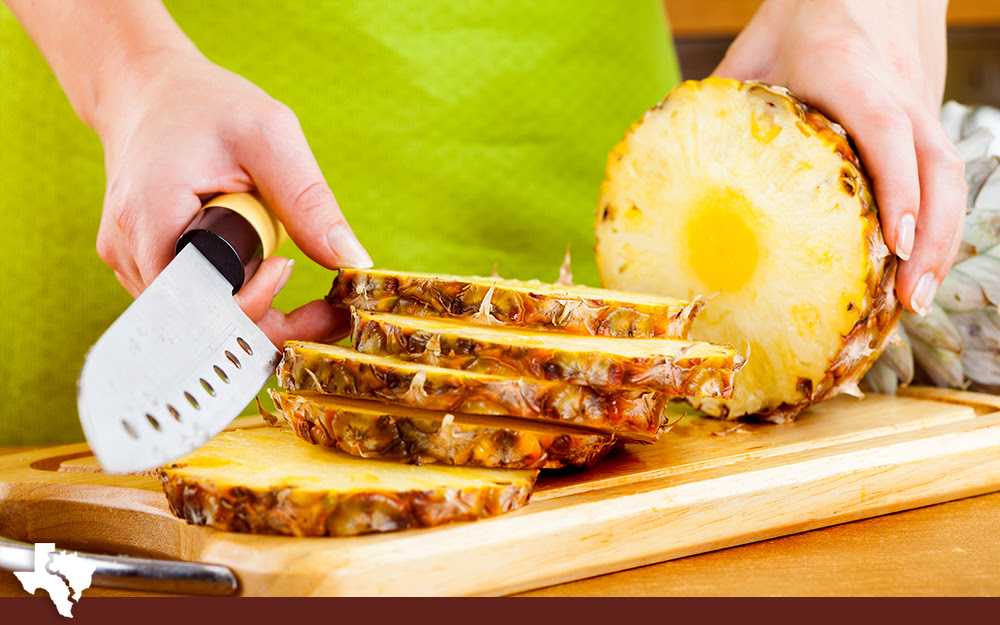
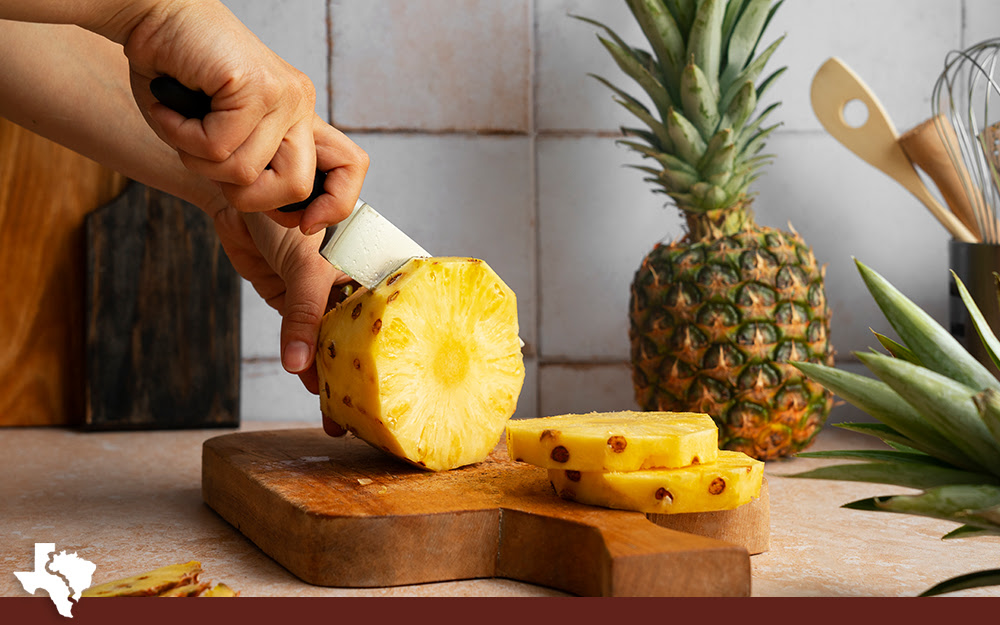
Prepare the pineapple by cutting it however you want for ease of grilling. A pineapple has a tough outer rind and a woody inner core, which is why rings are the go-to shape for canned pineapple. In our case, though, you have three good options.
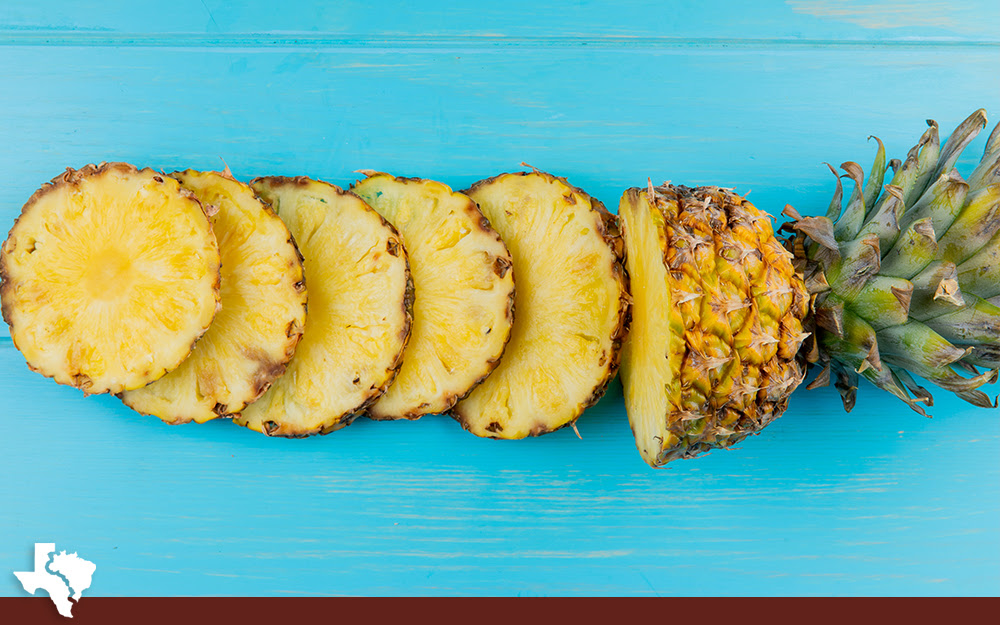
- Slices. Since you can eat around the core and, in fact, use the core as a structure for grilling, just cutting the pineapple into thick slices can be effective.
- Logs or rods. Think about how you might core and slice an apple, and do the same with the pineapple. Long rods of delectable pineapple flesh can be easily skewered or fried as-is.
- Whole. Cut off the outer rind and the top and bottom of the pineapple, run a skewer through the center core, and grill it whole. You can cut slices or chunks off it, re-coat it in sugar, and put it back on the fire to keep grilling, just like how we do larger cuts of meat.
Whichever method you choose is up to you.
The key to a great grilled pineapple is the sugary coating, so make the sugary coating next. The secret, as it so often is with restaurant foods, is going to be butter. Our recipe is:
- A third of a cup of butter, melted.
- A third of a cup of brown sugar, usually light brown sugar.
- Two teaspoons of cinnamon.
- Half a teaspoon of vanilla extract.
Mix this all up. The sugar and cinnamon will dissolve into the butter and extract mixture, giving you a syrupy kind of sauce. Brush this on your pineapple, or roll the pineapple in it, and put it over the grill. You’ll want to grill it for 2-3 minutes per side or per surface, enough to caramelize the sugar but not burn it. Keep an eye on it and adjust the heat as necessary.
You can serve this Brazilian-style alongside or in between cuts of meat, or you can serve it American-style as a dessert, either on its own or with a scoop of ice cream to go alongside it. There’s no wrong way to enjoy grilled pineapple, that’s for sure.
When you’re done with that, you can also try a pan-fried bananas foster, like what we serve as well.
While grilling up some pineapple is easy to do at home, setting up a whole home-made churrasco experience can be a lot of work, especially if you don’t have all the tools available. Fortunately, we have locations all across the country, so we’re sure to have one near you.
Want to try authentic Brazilian churrasco, traditional sides like feijoada, and palate cleansers like our delicious pineapple? Just stop on in! We’d love to have you.